
Indian River County Property Tax: How It Works in 2026
Indian River County Property Tax: How Your Bill Is Figured
- Your Indian River County property tax is your taxable value times the combined millage rate, divided by 1,000. One mill is $1 of tax for every $1,000 of taxable value.
- Combined 2025 rates ran from about 11.8 mills in Indian River Shores to about 18.4 mills in Fellsmere, with Vero Beach near 15.9 and Sebastian near 16.5.
- When you buy, the assessed value resets to market value on the next January 1. The seller’s tax bill is not your tax bill.
- Homestead caps yearly assessment increases at 3% or inflation, whichever is lower. For 2026 that cap is 2.7%. Non-homestead property is capped at 10% a year, and that cap doesn’t cover school taxes.
- File for homestead by March 1 of the year after you move in. Portability can carry up to $500,000 of your old Save Our Homes savings to a new Florida home.
- Bills go out by November 1. Pay in November and you save 4%. Full payment is due by the end of March.
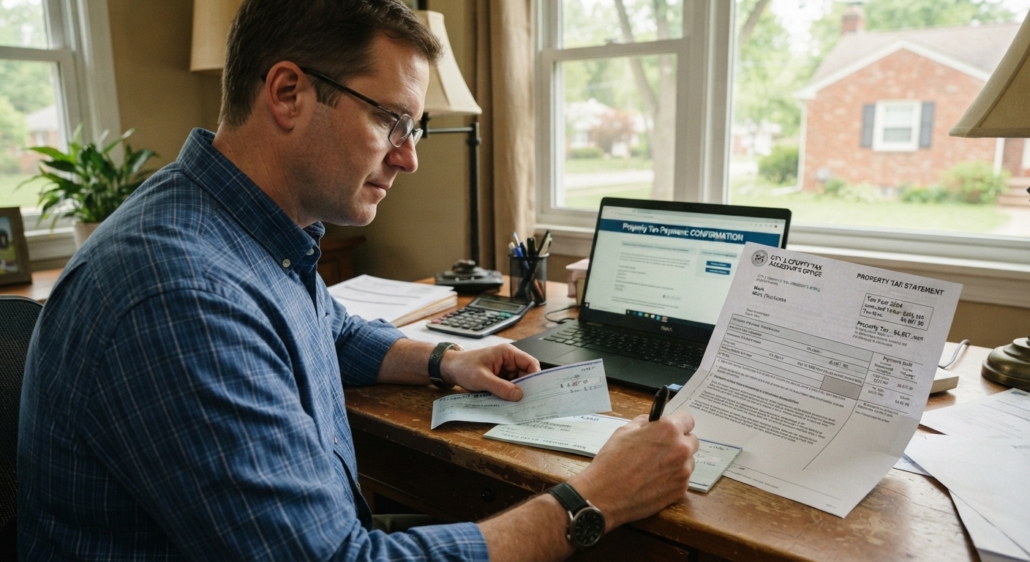
Indian River County property tax is the number that surprises buyers most, and it almost always comes back to one thing: they looked at what the seller paid. In Florida, a home’s taxable value resets when it sells, so a longtime owner’s $3,000 bill can turn into a $6,500 bill for you on the same house. Here’s how the bill is built, what the rates are, and how to estimate yours before you make an offer.
The formula
Every Florida property tax bill follows the same steps:
- Just (market) value. The Indian River County Property Appraiser estimates what the property was worth on January 1.
- Assessed value. Just value, reduced by any cap you qualify for (Save Our Homes on a homestead, the 10% cap on non-homestead).
- Taxable value. Assessed value minus exemptions, such as homestead.
- Tax. Taxable value times the combined millage rate, divided by 1,000.
Then any non-ad valorem assessments (flat charges for things like solid waste or special districts) get added on the same bill. Those don’t depend on value, so check the actual bill for them.
Indian River County millage rates by area
Your combined rate depends on where the property sits, because each city and special district adds its own levy on top of the county, school board and regional levies. These are the final 2025 rates from the Property Appraiser’s millage chart, which is what the November 2025 bills used:
| Area (tax code) | Combined 2025 millage | Tax per $100,000 of taxable value |
|---|---|---|
| Indian River Shores (6) | 11.8263 | $1,183 |
| Indian River Shores (5) | 11.9818 | $1,198 |
| Orchid (9) | 13.7539 | $1,375 |
| Unincorporated county (1) | 14.2045 | $1,420 |
| Vero Beach (8) | 15.8800 | $1,588 |
| Sebastian (2) | 16.4994 | $1,650 |
| Fellsmere (4) | 18.4039 | $1,840 |
Other unincorporated tax codes ran between about 13.2 and 14.2 mills. Your exact code is on the property’s record at ircpa.org.
For the 2026 tax year, the county kept its General Fund and MSTU rates flat for a seventh straight year and its Emergency Services District rate flat for a sixth, per the July 2026 budget proposal. For fiscal 2025/26, those rates were 3.5475, 1.1506 and 2.3531 mills. The School Board adopted 5.6740 mills in September 2026, down from 5.7530. Flat rates don’t mean flat bills, though. County taxable values rose about 6.8% this year, so a steady rate still collects more.
Homestead exemption and the Save Our Homes cap
If the home is your permanent Florida residence as of January 1, you can claim homestead. It does two things.
It takes value off the top. The first $25,000 of value is exempt from all property taxes. A second $25,000 exemption applies to assessed value between $50,000 and $75,000, and it doesn’t apply to school taxes. On most homes that means $50,000 off the non-school taxable value and $25,000 off the school taxable value.
It caps your assessment. Once you have homestead, your assessed value can’t rise more than 3% a year or the change in the Consumer Price Index, whichever is lower. The Florida Department of Revenue set that cap at 2.7% for 2026, 2.9% for 2025 and 3.0% for 2022 through 2024. This is the Save Our Homes cap, and over time it’s worth far more than the exemption. A home can gain 8% in market value while your assessment only rises 2.7%.
The deadline to file is March 1 of the tax year. Buy in June 2026, file by March 1, 2027. The Property Appraiser takes applications online. If you’re moving from another state, my post on the Florida homestead exemption for out-of-state buyers walks through what proof you’ll need, and establishing Florida residency covers the driver’s license, voter registration and car tag side.
There are extra exemptions for some seniors, widows and widowers, disabled veterans and disabled first responders. Ask the Property Appraiser’s office which you qualify for.
Non-homestead property: second homes and rentals
Snowbird homes, rentals and vacant land get no homestead exemption. They do get a cap: the assessed value can’t rise more than 10% a year. That cap applies only to non-school taxes. School taxes on non-homestead property are figured on full market value every year.
If you’re buying a seasonal place, run your numbers with no exemption at all. My guide to Vero Beach communities for snowbirds and buying a vacation home in Florida both assume you’ll be paying the full rate.
The new-buyer reset: why the seller’s bill doesn’t count
When a home sells, the caps go away. On January 1 after you close, the Property Appraiser reassesses the home at full market value. Your first full bill, the one you get in November of that year, is based on that new value.
Here’s an illustration using the 2025 Vero Beach rate. It’s an example, not a quote.
| Scenario | Assessed value | Approximate yearly tax |
|---|---|---|
| Longtime owner with homestead, capped value | $220,000 | About $2,840 |
| New owner, homestead, $450,000 purchase | $450,000 | About $6,500 |
| New owner, no homestead (second home), $450,000 purchase | $450,000 | About $7,150 |
The math on the second row: $425,000 school taxable value at 5.753 mills is about $2,445. $400,000 non-school taxable value at the remaining 10.127 mills is about $4,050. Add them and you’re near $6,500 before any non-ad valorem charges.
Notice that homestead only saves about $650 in year one on this house. The real savings show up in year five and year ten, when your capped assessment is well below market value. That’s also why portability matters.
Portability. If you already have a Florida homestead and you’re moving to another Florida home, you can transfer your Save Our Homes difference (market value minus assessed value) to the new home. The cap on what you can move is $500,000. You have to establish homestead on the new home within two years of giving up the old one.
If you’re downsizing, you move a share of the savings based on the new home’s value. If you’re upsizing, you can move the full difference, up to the cap. Apply when you file for homestead on the new home. This only works between Florida homesteads. Nothing carries over from another state.
TRIM notices, bills and the November discount
The year runs like this:
- January 1: value and exemption status are set as of this date.
- March 1: homestead and portability filing deadline.
- August: the Property Appraiser mails your TRIM (Truth in Millage) notice. It shows your values, exemptions, proposed rates and an estimate of your tax. It isn’t a bill.
- September: the county, cities and school board hold public budget hearings, listed on your TRIM notice.
- By November 1: the Tax Collector mails bills.
If you think the market value on your TRIM notice is too high, call the Property Appraiser first. Many issues get fixed there. If not, you can petition the Value Adjustment Board, and the deadline is 25 days after the TRIM notice mails. Don’t let it slide.
Pay early and you save. The Tax Collector’s discounts go by postmark:
| Pay in | Discount | On a $6,500 bill |
|---|---|---|
| November | 4% | $260 |
| December | 3% | $195 |
| January | 2% | $130 |
| February | 1% | $65 |
| March | 0% | $0 |
If your mortgage has an escrow account, your lender pays, and most pay in November. If you pay yourself and want to spread it out, the Tax Collector offers a quarterly installment plan for bills of $100 or more. You have to sign up before the bill goes out, so plan a year ahead.
How to estimate your Indian River County property tax before you buy
Use the purchase price, not the seller’s bill:
- Look up the parcel at ircpa.org and note its tax code.
- Find the combined millage for that code (table above, or the current year’s chart).
- If it’ll be your homestead, subtract $25,000 for the school portion and $50,000 for everything else. If not, don’t subtract anything.
- Multiply by the millage, divide by 1,000, and add the non-ad valorem charges from the current bill.
Do this on every home you’re serious about, because it changes the monthly payment more than people expect. It also belongs in your insurance math. See what Vero Beach home insurance costs for the other half of the carrying cost.
What could change after November 2026
Florida voters will decide Amendment 3 in November 2026. It needs 60% to pass. As passed by the Legislature in June 2026, it would raise the non-school homestead exemption to $150,000 in 2027 and $250,000 in 2028, then index it to inflation. It would cut the non-homestead cap from 10% to 5% for non-school taxes. People who move to Florida after January 1, 2027 would need five years of residency before getting the bigger exemption. School taxes are left out of the plan.
If it passes, homestead owners in Indian River County would see a big drop in the non-school part of their bill. Second-home owners would get slower growth, not a cut. I cover the details and the local budget fallout in Florida property tax elimination.
What I’d do before making an offer
Estimate the tax at your price, not the seller’s. If you’ll live here full time, get your Florida residency paperwork lined up so you can file for homestead by March 1. If you already own a Florida homestead, ask about portability before you sell. If you’re buying in Fellsmere or Sebastian, remember the city levy puts you above the unincorporated rate.
If you’d like me to run the property tax estimate on a specific Vero Beach or Sebastian home, send me the address here and I’ll send back the numbers.


Leave a Reply
Want to join the discussion?Feel free to contribute!