
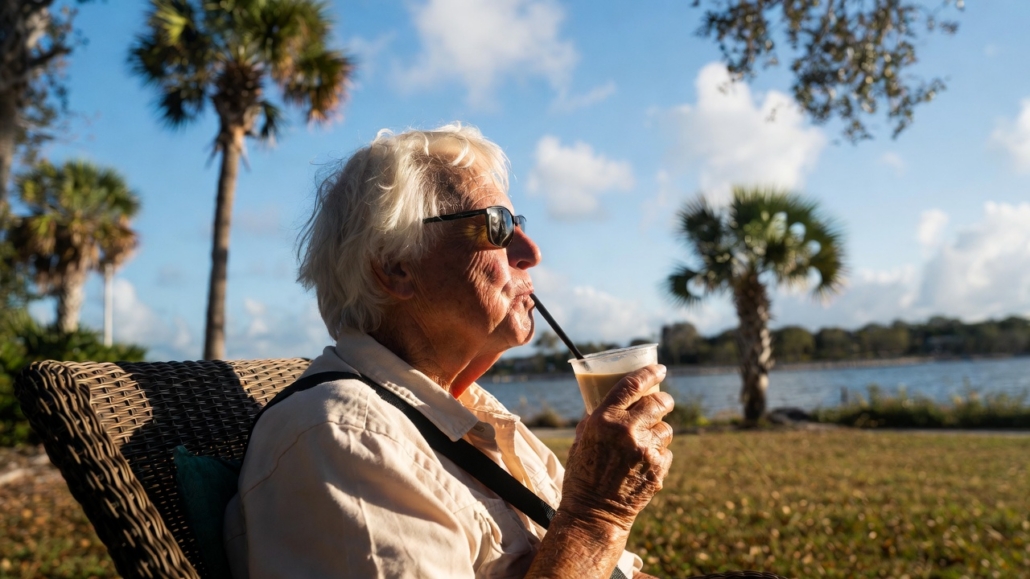
The Best Vero Beach Communities For Snowbirds
The Best Vero Beach Communities for Snowbirds: A Local Agent’s Honest Guide
- Snowbird communities in Vero Beach fall into three lanes: barrier island golf and beach clubs at the top (John’s Island, Orchid Island, Windsor, The Moorings), mainland gated golf in the middle (Grand Harbor, Bent Pine, Indian River Club), and value-priced 55+ and condo communities (Harmony Reserve, Del Webb, Vista Royale).
- The club membership is often a bigger decision than the house. John’s Island runs roughly $375,000 to join on top of the real estate, and Windsor’s golf equity is around $200,000, so budget for the buy-in before you fall in love with a floor plan.
- If you’ll only be here November through April, lock-and-leave matters more than square footage. Condos and villas with exterior maintenance included beat a big single-family home you have to worry about all summer.
- You can do the Vero Beach snowbird lifestyle well from about $250,000 in an established condo community to $20 million on the oceanfront. The right answer depends on golf, budget, and how much house you want to maintain from 1,200 miles away.
I get some version of this call every October. Someone from New Jersey or Ohio or Michigan has spent a week here, decided Vero Beach is the place, and wants to know which community to buy in. Then they tell me the list they’ve built from Zillow, and half of it is wrong for them. Not because the communities are bad, but because nobody explained the club membership math, the rental restrictions, or what it’s like to own a big house here when you’re in Cleveland from May to October.
So this is the guide I wish I could hand every snowbird before they start touring. I’m a licensed Florida real estate agent, I live here year-round, and I’ll give you the same straight version I give clients: the three lanes snowbirds actually shop in, what each one really costs, and the membership fine print that trips people up after they’ve already bought the house.
If you’re still deciding whether Vero Beach is your town at all, start with my complete relocation guide and come back. And if you want the full map of every neighborhood, not just the snowbird favorites, I keep a running guide to Vero Beach communities as well.
Lane one: the barrier island club communities
This is the Vero Beach that shows up in the golf magazines. East of the Indian River Lagoon, on the barrier island, you’ll find a handful of private club communities that are genuinely among the best in Florida.
John’s Island is the anchor. It sits in Indian River Shores just north of Vero proper, capped at 1,380 properties across roughly 1,650 acres, with three championship courses by Pete Dye, Jack Nicklaus, and Tom Fazio, plus an oceanfront beach club on about three miles of private beach. Membership is by invitation, it’s a member-owned equity club, and the all-in cost to join runs around $375,000 between the equity piece and the capital contribution. That’s on top of the house. Homes range from condos to oceanfront estates well into eight figures. One genuinely unusual perk: the vertical membership structure lets members’ parents, kids, and grandkids use the club without extra fees, which is why you see three generations of the same family here every Christmas. I’ve written a full John’s Island community guide if this is your lane.
Orchid Island Golf & Beach Club is smaller and quieter, with only 376 residences on 600+ acres running ocean to river, an Arnold Palmer course, and West Indies architecture that actually holds together as a neighborhood. If John’s Island feels like a small town, Orchid feels like a private resort.
Windsor is the design-world darling, a 425-acre new urbanist village of around 350 homes with a Robert Trent Jones links course and equity memberships that run about $200,000 for golf and $100,000 for social. It’s beautiful and it knows it.
The Moorings and Sea Oaks round out the island for buyers who want club life at a lower entry point. The Moorings sits on the south beach with yacht and country club amenities and a mix of condos, villas, and estate homes. Sea Oaks is tennis-first with a private beach club, and its villas and condos are some of the most sensible snowbird buys on the island.
The honest read: if you golf seriously and plan to spend five or six months a year here, these communities are worth every penny because the club becomes your social life. If you golf twice a winter, you’re paying a country club premium for a beach you can access from a lot of other addresses.
Lane two: mainland gated golf communities
Cross the bridge and prices drop meaningfully while the golf stays legitimate.
Grand Harbor is the one I show snowbirds most, because it covers the widest range. It’s a gated golf and beach club community on the mainland side of the lagoon with two courses, a marina, a 32,000 square foot clubhouse, and its own beach club over on the island. Condos start around $400,000, resale homes run from there up to several million, and new construction in neighborhoods like The Reserve now starts in the high six figures and climbs past $1.8 million. Club membership is separate from the real estate, and there are tiers, so you can buy the condo and take a social membership without swallowing a full golf equity buy-in. My Grand Harbor community guide breaks down the neighborhoods inside the gates.
Bent Pine is the pure golfer’s play: a classic course community west of town where the golf pedigree exceeds the price point. Indian River Club is similar, an Audubon-certified course with a friendly membership and homes that cost a fraction of the island clubs. Pointe West gives you a traditional neighborhood feel with golf attached and some of the most affordable single-family homes in any Vero golf community.
The mainland trade-off is simple: you give up walking to the beach and you gain two things snowbirds consistently underestimate, which are newer concrete block construction and lower insurance costs. When you’re writing the homeowners insurance check from Pennsylvania in August, that second one matters.
Lane three: 55+ and value condo communities
This is the lane the luxury-focused sites ignore, and it’s where a huge share of actual snowbird transactions happen.
Harmony Reserve is the standout newer option, a gated 55+ community built from 2015 onward with a resort pool, eight lighted pickleball courts, and single-family and attached homes that have been trading around $470,000 to $525,000. It’s the community I recommend when someone wants new-ish construction, real amenities, and no club buy-in.
Del Webb has active adult product in the area with single-family homes starting in the mid $400,000s, and the broader Waterway Village corridor gives you DiVosta-built gated living with clubhouses, pools, and pickleball at similar money.
Then there’s the established condo tier: Vista Royale, Vista Plantation, Vista Gardens, and Village Green. These are older communities, mostly 1970s and 1980s construction, and the units are modest. But you can still get into some of them in the $150,000 to $250,000 range, many include golf or serious amenities in the fees, and they are ruthlessly practical snowbird machines: lock the door in April, drive north, and the association handles the exterior all summer. Across Vero’s 55+ communities as a whole, average pricing sits around the mid $300,000s, which tells you how much room this lane has under the club communities.
The catch in this tier is fees and rules. Older condo associations carry rising insurance and reserve costs, and many have minimum lease terms and approval processes. Read the budget and the rental rules before you write the offer. I do this with clients on every condo deal here, because a bargain unit in a badly funded association is not a bargain.
The club membership fine print nobody explains
Here’s the part that separates a good snowbird purchase from an expensive lesson. In Vero’s club communities, the house and the club are usually separate transactions, and the club side has its own rules:
- Equity buy-ins are real money and often non-refundable. John’s Island is roughly $375,000 to join. Windsor is $200,000 for golf equity. These are not deposits you get back at closing when you sell.
- Membership can be by invitation, with waits. At the top clubs you don’t simply buy a house and receive a membership. There’s a process, and at times there’s scarcity, especially for full golf.
- Some communities effectively require membership, some don’t. Grand Harbor’s tiered structure gives you options. Others tie a minimum social membership to the deed. Ask before you offer, not after.
- Dues are a permanent line item. At the top clubs, annual dues can run well into five figures. Budget them like a second HOA.
None of this is a reason to avoid the club communities. It’s a reason to price the whole picture, house plus buy-in plus dues plus insurance, before you compare a $900,000 club home against a $500,000 non-club home and think you’re comparing like with like.
Condo, villa, or house? The six-months-away test
My rule for snowbirds is the six-months-away test: whatever you buy, you have to be comfortable leaving it alone through an entire Florida summer, including hurricane season.
Condos and villas with association-maintained exteriors pass the test easily. A single-family home passes if it’s newer concrete block construction with impact glass and you’re willing to pay for a home watch service, roughly $40 to $100 a visit here, plus landscaping and pest control while you’re gone. A big older home on the island with original windows fails the test for most people, no matter how good the price looks.
This is why so many first-time snowbirds start in a condo at The Moorings, Sea Oaks, Grand Harbor, or the Vista communities, then trade up to a house once they’ve decided Vero is a forever thing. It’s also why I’ll sometimes talk a buyer out of the bigger house they can technically afford. The right snowbird property is the one you never think about from Ohio.
How to actually choose
Strip away the marketing and the decision comes down to four questions:
- How much do you golf? Serious golfers belong in the club lanes. Everyone else is buying an expensive amenity they won’t use.
- Island or mainland? Island gets you the beach walk and the prestige. Mainland gets you newer construction, lower insurance, and more house per dollar.
- What’s your all-in budget? House plus buy-in plus dues plus insurance plus a summer of home watch. Run that number for each community and the field narrows fast.
- How long is your season? Five or six months justifies club life. Ten weeks in a condo probably doesn’t.
Every community in this post can be the right answer for the right buyer. The mistake is starting from the listings instead of starting from these questions.
Come see it in season
Photos don’t tell you what a community feels like in February, when the season is in full swing and the clubhouse parking lot is full. If you’re planning a scouting trip, come between January and March, tour at least one community from each lane, and see which version of the lifestyle actually fits. While you’re here, my local’s list of things to do will fill the hours between tours.
I help snowbirds do exactly this every winter, including the unglamorous parts like reading condo budgets and getting straight answers on membership availability. If you want the local read on any community in this post, get in touch or call or text me at (772) 999-4457. No pressure and no spam. You can also start at jonsterling.com to see how I work.
Related reading


Leave a Reply
Want to join the discussion?Feel free to contribute!