
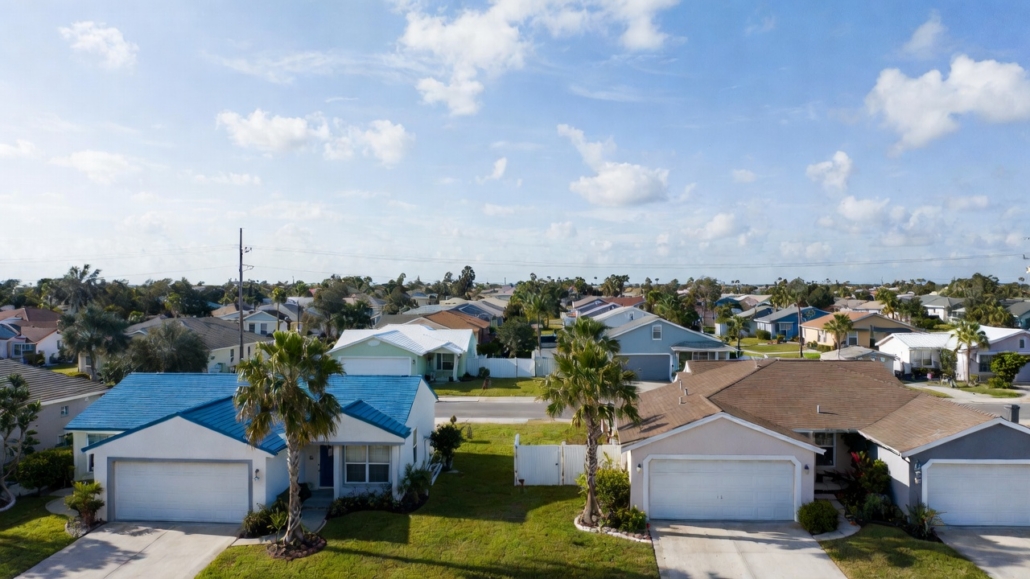
The Real Cost of Living In Vero Beach vs. The Northeast
Overview
- The cost of living in Vero Beach is very reasonable. A median Vero Beach home runs about $400,000 to $420,000 in early 2026, and right now buyers have the leverage, with homes sitting on the market for months and most listings seeing price cuts.
- Florida has no state income tax, no estate tax, and no inheritance tax, while New York tops out near 10.9 percent and New Jersey near 10.75 percent, so a high earner can save five figures a year just by changing their address.
- Property taxes are where the Northeast quietly bleeds you, with New Jersey homeowners paying a median of roughly $9,300 a year against a Florida bill that, on the same home value, often lands at less than half that once you claim the homestead exemption.
- The honest counterweight is insurance, since Florida is the most expensive state in the country for homeowners coverage, though inland Vero Beach sits well below the South Florida coastal extremes and the market is softening in 2026.
- The full picture matters more than any single line, so this post walks the whole money math, not just the parts that flatter Florida.
If you are sitting in Westchester, Bergen County, or somewhere outside Boston with a spreadsheet open, you have probably already noticed something. The Vero Beach listing you are eyeing costs less than your current house, and yet every portal you check only shows you the purchase price. None of them tell you the true cost of living in Vero Beach once the closing is done.
I have sold real estate on three continents before settling my family in Vero Beach, and the question I get most from Northern buyers is some version of “what am I not seeing?” Fair question. The sticker price is the easy part. The real comparison is the annual carrying cost, and that is where the gap between the Treasure Coast and the Northeast gets wide. Let me show you the whole picture, including the line items that work against Florida, because you deserve the math, not a pitch.
The home price gap runs the opposite direction from what you expect
Understanding the cost of living in Vero Beach starts with the thing you can see. A median home in Vero Beach sold for somewhere around $400,000 in early 2026, and prices per square foot have been climbing, with other trackers putting the median closer to $420,000 over the most recent month. Indian River County as a whole sits a touch lower than the city proper.
What surprises Northern buyers is the leverage. As of early 2026, Vero Beach homes were taking around 80 days to sell, inventory had loosened, and the majority of listings were seeing price reductions. That is a buyer’s market by any honest definition. You are not fighting ten offers and waiving inspections the way you might have a few years ago.
And you are not alone in looking. New York buyers searched to move into Vero Beach more than any other metro in a recent stretch, with Washington and San Francisco close behind. The Northern migration to this part of Florida is real, and it is the reason this market behaves the way it does.
So the first line of your comparison favors you before you have even factored in taxes. You are likely buying a comparable or nicer home for less than you would sell your current one. Hold that thought, because the carrying cost is where it compounds.
The income tax line nobody on Zillow shows you about the cost of living in Vero Beach
The single biggest lever no real estate portal will ever put it in front of you because it has nothing to do with the house is no Florida income tax.
Florida is one of nine states with no state income tax at all. Zero.
There is also no state estate tax and no inheritance tax. Now look at where you are leaving. New York’s top marginal rate sits at 10.9 percent, and New York City residents pay both state and city income tax, with a combined top rate near 14.8 percent. New Jersey tops out around 10.75 percent. Connecticut runs to 6.99 percent, and because of the way the state recaptures the benefit, many high earners there end up paying their top rate on all of their income, not just the amount above the threshold. Massachusetts uses a flat 5 percent rate but adds a surtax on high earners, which pushes the effective rate up sharply once your income crosses a million dollars.
Run that against a real income. If your household earns $300,000 in New Jersey, the state income tax alone is a meaningful five-figure annual bill. In Florida, that line is a flat zero. For a business owner, a retiree drawing down investments, or a two-income professional couple, this one difference can cover a large chunk of your entire Florida housing cost. This is the math that drives the migration, and it is the math the listing portals are structurally incapable of showing you.
Property taxes: where the Northeast quietly bleeds you
People assume Florida must claw the income tax savings back somewhere. The natural suspect is property tax. It does not hold up.
The Northeast carries some of the heaviest property tax burdens in the country. New Jersey leads the nation with a median annual property tax bill above $9,300, followed by New Hampshire near $6,700, Connecticut around $6,600, New York around $6,500, and Massachusetts around $6,000. For context, the average American household pays roughly $3,119 a year in property tax. The Northeast is paying double or triple that.
Florida sits far lower. On the same home value, a Florida property bill frequently lands at less than half what the identical home would owe in New Jersey, and the gap widens once you account for two things every relocating buyer should understand.
First, the homestead exemption. If the Vero Beach home is your primary residence, Florida lets you shave up to $50,000 off the assessed value through the Homestead Exemption, filed between January 1 and March 1 on a home you owned as of January 1. Second, the Save Our Homes cap, which limits how much your assessed value can rise each year once that exemption is in place. In a rising market, that cap protects you from the kind of reassessment spikes that quietly inflate Northern tax bills year after year.
There is an honest caveat here, and I will name it. If you keep your Northern home as your primary residence and treat the Vero Beach place as a second home, you do not get the homestead exemption on the Florida property. The deeper tax advantages flow to people who actually relocate and establish Florida residency. I will come back to that distinction at the end, because it changes the math.
The honest counterweight: home insurance
Now the line that works against Florida, because a comparison that only flatters one side is worthless to you.
Florida is the most expensive state in the country for homeowners insurance. That is not spin, it is the reality of insuring property in a hurricane state. How expensive depends heavily on where and what you buy. Statewide averages from different methodologies land anywhere from roughly $3,240 to $4,500 a year for typical inland homes up to a statewide figure above $7,000 for $300,000 in dwelling coverage. The most extreme premiums sit in coastal South Florida markets like Miami-Dade.
Vero Beach and Indian River County land in the middle of that spectrum, not the top. An inland mainland home will insure for meaningfully less than a barrier island property exposed directly to the ocean. A few things to know before you budget:
- There is a separate hurricane deductible, typically 2 to 10 percent of your dwelling coverage, meaning you absorb the first chunk of any hurricane wind damage yourself.
- Flood damage is not covered by a standard homeowners policy and requires separate flood insurance through the NFIP or a private carrier.
- A wind mitigation inspection is one of the highest-return moves a Florida homeowner can make, often cutting $500 to $2,000 off the annual premium.
The trend is moving in your favor. After recent tort reform aimed at the lawsuit abuse that drove premiums up, multiple carriers have filed rate reductions in the 5 to 10 percent range in 2026, and new insurers have entered the market. Insurance is a real cost in this comparison, and you should plan for it honestly. It is also the one line where the Northeast wins, so I am not going to pretend otherwise.
Putting the annual math together
Forget the purchase price for a second and compare what it actually costs to carry a home for a year.
In the Northeast, a household in a comparable home is often looking at a property tax bill in the $6,000 to $9,000-plus range, a state income tax bill that can run well into five figures for a solid income, and a homeowners insurance premium that is modest by comparison. The tax lines dominate.
In Vero Beach, you flip that structure. Property tax on a homesteaded primary residence is materially lower, state income tax is zero, and insurance is your largest single variable cost. For most relocating households earning a real income, the income tax savings alone outrun the higher insurance premium, and the lower property tax bill is gravy on top.
The point is not that Florida is free. It is that the cost structure is completely different. The Northeast front-loads its cost into taxes you pay every year regardless of risk. Florida shifts more of the cost into insurance, which you can shop, mitigate, and reduce. One of those you control. The other you do not.
What the cost of living in Vero Beach actually means to you
The size of your savings depends on what kind of move you are making.
If you are relocating fully, selling the Northern home, establishing Florida residency, and homesteading here, you capture the entire stack: no income tax, the homestead exemption, the Save Our Homes cap, and a home that likely cost less than the one you sold. This is the scenario where the math is overwhelming, and it is why so many of my clients from New York and New Jersey end up wondering why they waited.
If you are buying a winter place and keeping your Northern primary residence, the picture is more modest. You still get the lower purchase price and Florida’s lack of a state income tax on Florida-source income, but you forgo the homestead protections on the second home, and you are now carrying insurance on two properties. That can still pencil out beautifully, especially if you eventually flip your residency south, but you should run it as the two-home scenario it actually is.
Either way, the only number that matters is your number, built on your income, your target home, and your residency plan. The portals will never build that for you. That is the work I do with every Northern buyer who lands on this site.
If you want me to run your actual numbers, side by side, against where you live now, reach out here and tell me where you are coming from and what you are looking at. I will give you the honest comparison, insurance line included.


Trackbacks & Pingbacks
[…] A 2,000 square foot house for $439,000 is a hard thing to find in most of the Northeast. My post on the real cost of living in Vero Beach vs the Northeast puts some of those differences side by […]
Leave a Reply
Want to join the discussion?Feel free to contribute!