
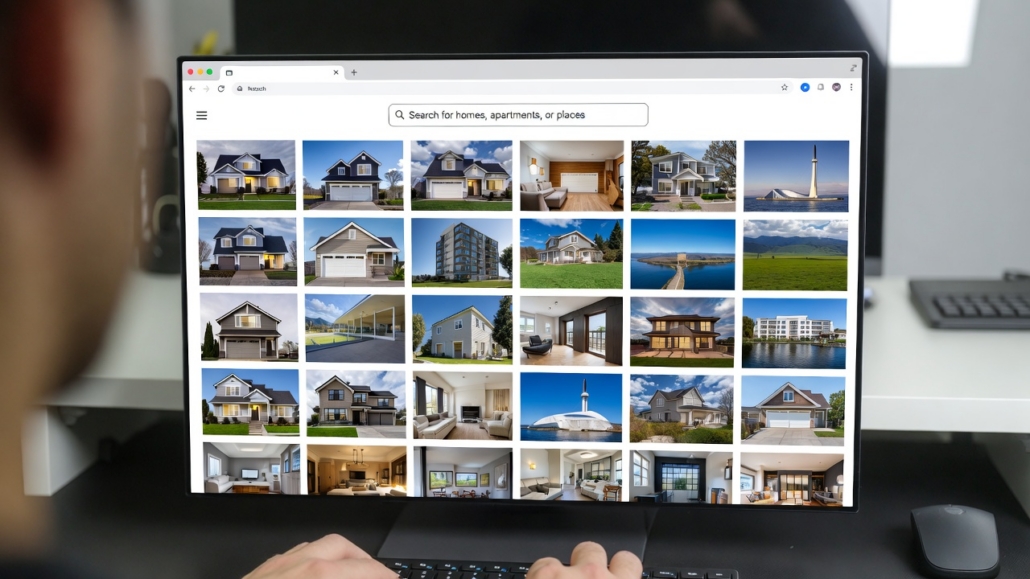
Alternatives To Zillow
Alternatives to Zillow: 10 Better Places to Search for Homes
- Nearly every alternative to Zillow pulls the same MLS feed, so what separates them is refresh speed and who answers when you hit the contact button.
- The agent pictured next to a listing on the big portals usually bought that spot and often has not seen the house.
- Zillow’s Listing Access Standards keep certain pre-marketed homes off the site entirely, so searching one portal is no longer searching everything.
- The county property appraiser is free, public, and more useful for negotiating than any portal feature.
- The setup that works: one national portal for browsing, one local agent’s feed with alerts for anything serious.
Every buyer I work with shows up with Zillow open in a tab. That is fine. Zillow is the best browsing interface anyone has built for real estate and I use it myself.
The trouble starts when people treat it as the full inventory and the pricing authority.
Zillow does not have listings of its own. Almost nothing on the site is proprietary. It receives a feed from the local MLS, the same feed sent to Realtor.com, Redfin, Homes.com, and every agent website in your market. What differs is how fast each one refreshes, how much of the feed it chooses to display, and what happens after you click.
Why buyers go looking
Four complaints, over and over.
The Zestimate. It is a statistical model. It degrades badly wherever comparable sales are thin, which describes most of what people actually want in Vero Beach. Oceanfront, riverfront, and club properties do not have enough true comps for an algorithm to price with confidence.
A few years ago, Zillow’s own CEO listed his house for sale on Zillow. The Zestimate was off by over 20% when it eventually sold. Even the CEO couldn’t get the Zestimate to work well!
The agent you reach is not the listing agent. Zillow sells buyer inquiries by zip code. That agent may be excellent. They may also be an hour away, reading the same description you are.
Stale statuses. The national portals sit further downstream, so a house can show active for a day or more after it went pending. That is a wasted Saturday.
Missing listings. Homes marketed publicly before hitting the MLS can be excluded from Zillow under its Listing Access Standards. Brokerages have spent two years fighting about this in court and in front of state regulators. What it means for you is that no single site holds everything.
The 10 best alternatives to Zillow
1. An agent’s own MLS-fed site
Cards on the table: I am a licensed Florida real estate agent, so putting this first serves me. Here is the case anyway.
An agent site runs on an IDX feed. Same MLS data the portals get, fewer hops between the MLS and your screen, and no lead router between you and a person who works this market every day. When you fill out a form on my site, it reaches me.
The honest tradeoff is coverage. Agent sites do one market well and everything else badly. If you are casting a net across three states, use a portal. If you have narrowed to a county and you are serious, use the local feed. Most buyers should be doing both, and most buyers do neither, because they never learn the difference exists.
2. My Vero Beach new listings search
For Indian River County specifically, this is the page I send clients to. It pulls direct from BeachesMLS, sorts by what actually just hit the market, and carries the full filter set, including the ones portals bury or omit: HOA fee, dock, acceptable financing, adult community, waterfront, lot acreage.
The part that matters is saved-search alerts. In the price bands where Vero moves quickly, [PLACEHOLDER: your real number, e.g. “anything clean under $500K in 32963”], the good listings get seen and shown inside a few days. An email off a fast feed beats refreshing an app at midnight.
3. Realtor.com
The most reliable national portal on listing status, because of how directly it sits on MLS data. Weaker estimate tools, which is a fine trade.
4. Redfin
Owned by Rocket now. The map interface is still the best in the category and the sold-comp data is genuinely useful rather than decorative. Redfin also cut a distribution deal with Compass in early 2026, so some pre-marketed inventory surfaces there that does not appear on Zillow. Its coverage no longer overlaps perfectly with Zillow’s, which is exactly why it earns a spot.
5. Homes.com
CoStar-owned, built around a promise the others will not make: your inquiry goes to the listing agent instead of being sold. Understand what that means before you call. The listing agent works for the seller and owes you nothing but honesty. But if you want to reach the person who has actually walked the property, this is the shortest path to them.
6. Your county property appraiser
The most underused free tool in real estate, and the one I would keep if you took the rest away. In our market that is the Indian River County Property Appraiser. Ownership history, sale dates and prices, assessed values, parcel boundaries.
Before I write an offer I check how long the seller has owned it and what they paid. Somebody who bought in 2019 has room to move. Somebody who bought in 2023 with a mortgage may not, no matter how motivated they sound. That one lookup shapes my negotiating position more than anything on a portal, and it costs nothing.
7. Brokerage sites for pre-market inventory
Compass, Sotheby’s, Douglas Elliman, and the larger regional firms run their own listing networks, and inventory sometimes lives there before reaching the MLS. Compass in particular built its business around a phased release and got a lot bigger at it after acquiring Anywhere Real Estate in January 2026.
You should check these sites, because that is where some homes are. I will also say plainly that I think the model is bad for sellers. A listing that only a fraction of the market can see gets a price that only a fraction of the market set. Sellers are told this protects them from days-on-market and price-drop history. What it protects is the brokerage’s ability to represent both sides. Plenty of good agents disagree with me on this and some of them will tell you so.
8. Auction and distressed platforms
Auction.com, Hubzu, and Xome carry bank-owned inventory that mostly never touches a portal. Real discounts and real risk: often sight unseen, sometimes with title issues, sometimes with people still living there. Reasonable for experienced investors, rough for a first purchase.
9. FSBO channels
Facebook Marketplace, FSBO.com, ByOwner. Worth ten minutes a week for estate sales and the occasional owner who never called an agent. The signal-to-noise is bad, so filter hard.
10. Land and rentals
Portals handle vacant land poorly, so use LandWatch or Land.com where acreage, zoning, and road frontage are real filters. More on that in my guide to homes with land for sale.
For rentals, Apartments.com and Rent.com, plus Furnished Finder for seasonal stays, which is the one snowbirds tell me they wish they had found a year earlier. Skip HotPads and Trulia. Zillow owns both, so switching to them is not switching.
A word on AI search
People increasingly start a home search by asking ChatGPT or Claude rather than typing into Google. Those tools are good at the research layer: comparing neighborhoods, explaining flood zones, summarizing how an HOA is structured. They are unreliable on live inventory, because whatever listing data they surface is scraped and cached. Use them to build your questions.
What none of them can give you
Every source above is data. None of them is context.
No portal will tell you a street floods during a hard August afternoon, that an association has a special assessment coming in the spring, that a listing already lost two contracts over insurance, or that an estate will take well under asking to close before year end.
That last category matters more here than in most places. Roof age, wind mitigation, and flood zone can swing your monthly carrying cost by several hundred dollars between two houses that look identical in photos, and none of it appears in a portal filter. My post on whether Vero Beach gets a lot of hurricanes covers what actually drives premiums here. The inspection checklist covers what to look for once you are under contract.
If you have narrowed to two or three neighborhoods, go drive them on a Saturday morning. The community guides will tell you which ones are worth the trip.
Common questions about alternatives to Zillow
Is anything more accurate than Zillow?
For listing status, yes. Realtor.com and agent IDX sites update faster. For value estimates, no consumer website is dependable where comps are thin, and you want a CMA or an appraisal instead.
Do all these sites show the same homes?
Mostly. They pull the same MLS feed and then apply their own display rules on top of it. Auction and FSBO inventory never enters the MLS at all, and some pre-marketed listings get excluded from Zillow under its standards.
Why does a sold house still show as available?
Feed lag.
Are Trulia and HotPads alternatives to Zillow?
No. Zillow owns both, along with StreetEasy.
Can I see off-market homes without an agent?
Rarely. Pre-market and office-exclusive inventory generally requires MLS access or a direct relationship with the listing brokerage, which is most of the argument for having an agent at all in a tight market.
What I would actually set up
One national portal for browsing. One local agent’s feed with saved-search alerts for anything you are serious about. The county appraiser open in a third tab the moment a specific house gets interesting.
If Vero Beach, Sebastian, or anywhere in Indian River County is on the list, set up alerts on my new listings search. Or skip the tabs entirely, get in touch, and tell me what you are looking for. Call or text 772-999-4457.


Leave a Reply
Want to join the discussion?Feel free to contribute!