
Home Inspection Checklist For Buyers
Home Inspection Checklist for Buyers (From a Florida Agent)
- A home inspection is a visual, non-invasive review of the home’s structure and major systems, and it usually costs somewhere around $300 to $450 and takes 2 to 4 hours.
- This post includes the full room-by-room checklist you can bring with you, covering the exterior, roof, attic, plumbing, electrical, HVAC, kitchen, bathrooms, and interior rooms.
- If you’re buying in Florida, the standard checklist isn’t enough. You also need to think about four-point inspections, wind mitigation, roof age, WDO reports, and hurricane protection, because those drive your insurance cost.
- On Florida’s standard AS-IS contract, the inspection period is your one clean exit. The seller doesn’t have to fix anything, so your real decision is proceed, renegotiate, or walk.
You found the house, your offer got accepted, and now you have a short window to figure out whether you’re buying a solid home or a money pit with fresh paint. That window is the inspection period, and it’s the single best consumer protection you have in the entire transaction.
I’m a licensed Florida real estate agent in Vero Beach, and I’ve sat through a lot of inspections. Here’s the complete checklist I’d hand any buyer, plus the Florida-specific items that national checklists always leave out. Those Florida items matter more than most of the checklist, because down here the inspection doesn’t just tell you what needs fixing. It tells you whether you can insure the house and what that insurance will cost.
What a home inspection actually covers
A home inspection is a visual, non-invasive review of the home’s condition. The inspector isn’t opening walls or pulling up flooring. They’re checking the roof, foundation, electrical, plumbing, HVAC, attic, and every room, then writing up a report of what they found.
Expect to pay somewhere in the range of $300 to $450 for a typical single family home, more for larger properties or add-on inspections. It takes 2 to 4 hours, and you should be there for it. Walking the house with the inspector teaches you more about your future home than anything else in the buying process, and you can ask questions in real time instead of trying to decode a 60-page PDF later.
One thing worth knowing before you start: inspection reports look scary. Every report lists dozens of items, because that’s the inspector’s job. Your job is sorting the big stuff (roof, electrical panel, foundation, active leaks) from the small stuff (a slow drain, a missing outlet cover). More on that below.
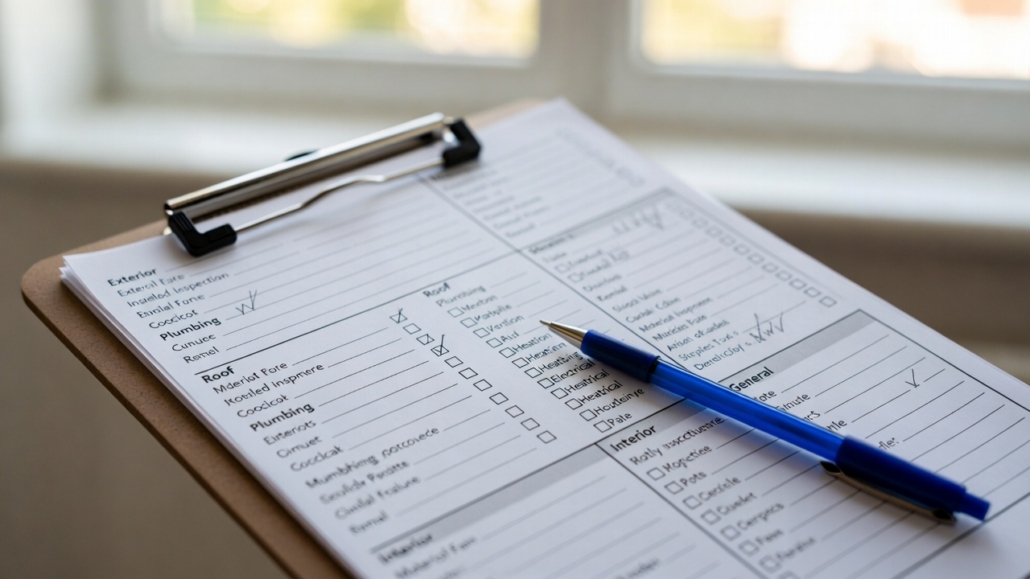
The buyer’s home inspection checklist
Bring this with you. Your inspector has their own detailed process, but following along with your own list keeps you engaged and helps you ask better questions.
Exterior and grounds
- Foundation shows no significant cracks or shifting
- Ground slopes away from the house, no standing water near the foundation
- Exterior walls look straight, no bulging or sagging
- Siding and stucco free of cracks, holes, and soft spots
- Window and door frames square, no rot or separation
- Paint not peeling or blistering
- Driveways and walkways without major cracks or trip hazards
- Fences, decks, and any outbuildings solid, no rotted wood
- Sprinkler system runs and covers the yard properly
Roof, gutters, and attic
- Shingles or tiles intact, none missing, curling, or cracked
- No sagging areas along the roofline
- Flashing around chimneys, vents, and valleys in good shape
- Gutters attached, draining away from the house
- Attic shows no water stains or daylight through the roof deck
- Insulation adequate and evenly distributed
- Ventilation working (soffit vents, ridge vents, or louvers)
Plumbing
- Water pressure adequate at every fixture, hot and cold
- Visible pipes free of corrosion, leaks, and amateur repairs
- Water heater free of rust, properly strapped and vented
- Hot water temperature not above 125 degrees
- All sinks, tubs, and showers drain without gurgling or backing up
- Toilets flush properly and sit solid, no rocking, no stains at the base
- No signs of water damage under any sink
Electrical
- Panel is a modern breaker panel with room to spare, correctly labeled
- No double-tapped breakers or exposed splices
- Outlets grounded, GFCI protection in kitchens, baths, garage, and exterior
- Switches and fixtures all work
- No aluminum branch wiring (common in some late 1960s and 1970s homes)
- Smoke and carbon monoxide detectors present and working
HVAC
- System cools and heats when tested
- No unusual noises, odors, or short cycling
- Air handler and condenser age noted (matters for insurance and budgeting)
- Filters clean, ductwork intact in the attic
- Condensate line draining properly, no water around the air handler
Kitchen and bathrooms
- Built-in appliances all operate
- Exhaust fans vent to the outside, not into the attic
- No leaks or moisture damage in cabinets under sinks
- Caulk and grout intact around tubs and showers
- No soft spots in floors around toilets and tubs
Interior rooms
- Floors level, no significant slopes or soft areas
- Walls and ceilings free of stains, large cracks, and patched-over damage
- Doors and windows open, close, and latch properly
- No musty smells (take this one seriously in Florida)
- Stairs and railings solid
The Florida section: what national checklists miss
Everything above applies anywhere in the country. If you’re buying in Vero Beach or anywhere on the Treasure Coast, the items below are where deals actually get made or broken.
The four-point inspection. If the home is older, your insurance company will likely require a four-point inspection covering the roof, electrical, plumbing, and HVAC. This isn’t for your benefit. It’s the insurer deciding whether they’ll write the policy at all. An FPE or Zinsco electrical panel, polybutylene piping, or an aging roof can each turn into an insurance problem, and an insurance problem is a closing problem.
Wind mitigation. A wind mitigation inspection documents the features that help your home stand up to hurricanes, like the roof-to-wall attachment, roof deck nailing, and opening protection. The credits from a good wind mit report can cut your premium meaningfully, so order one alongside the general inspection. It usually adds a small cost and pays for itself the first year.
Roof age. In Florida, the roof is the whole ballgame for insurance. Ask the age of the roof before you even write the offer, and have the inspector confirm its condition and remaining life. An older roof doesn’t automatically kill a deal, but it changes the math, and it’s a legitimate negotiation point. My reasonable offer chart covers how condition issues like this should shape your number.
WDO (termite) inspection. A wood destroying organism inspection is a separate report from a licensed pest inspector. Termites are a fact of life in Florida, and so is old termite damage that was never disclosed. If you’re financing with a VA loan, a WDO report is typically required anyway. Get one regardless.
Hurricane protection. Impact windows, rated shutters, or plywood and a prayer? Know which one you’re buying. Impact windows and doors affect both your insurance and your peace of mind every June through November.
Water intrusion and mold. Our humidity means small leaks become mold problems fast. If the inspector flags moisture readings or you smell mustiness, a separate mold assessment is cheap insurance before you’re the owner of the problem.
Septic, wells, and pools. Plenty of homes west of town are on septic and well rather than city utilities. Those need their own inspections, and so does a pool if the home has one. General inspectors give pools a light once-over at best. A dedicated pool inspection catches the resurfacing job or failing pool heater that costs real money. Some of the Vero Beach communities I work in are on city utilities and some aren’t, so this varies house to house.
How the inspection works on Florida’s AS-IS contract
Here’s the part that surprises buyers moving from other states, and I cover more of these surprises in my Vero Beach relocation guide.
Most Florida homes sell on the standard AS-IS contract. During your inspection period, you can cancel for basically any reason and get your deposit back. That’s powerful. But the flip side is the seller has no obligation to repair anything. There’s no formal repair request process built into the contract.
So after the inspection, you have three real options:
- Proceed as-is. The issues are minor or already priced in.
- Renegotiate. Ask for a price reduction or a credit at closing. The seller can say no, but if the issues are legitimate, most sellers would rather negotiate than put the house back on the market with a known problem.
- Walk. Cancel within your inspection period and get your deposit back.
Watch your dates. The inspection period is negotiated in the contract, and if it expires before you cancel, your deposit is at risk. This is one of the places where having an agent who tracks deadlines earns their keep.
One more note: cash buyers sometimes feel pressure to waive the inspection to make their offer stronger. Shorten the inspection period if you need a competitive edge, but don’t skip it. I’ve written about how cash offers work in this market, and even the institutional buyers inspect everything.
What’s a big deal and what isn’t
After a few hundred pages of inspection reports, here’s my honest sorting:
Big deals: roof at end of life, foundation movement, outdated or hazardous electrical panels, polybutylene plumbing, active leaks, significant WDO damage, HVAC at end of life, and anything that makes the home hard to insure.
Usually not big deals: cosmetic cracks, worn caulk, a sticking door, older but functioning appliances, missing GFCI outlets, minor grading issues. These are weekend projects and small invoices, not reasons to blow up a purchase.
The report is a tool, not a verdict. Almost every home, including new construction, produces a long list. What matters is whether the big-ticket systems are sound and whether the insurance picture works.
Buying in Vero Beach? Bring me to the inspection
I attend inspections with my buyers, and I can point you to inspectors here on the Treasure Coast who are thorough without being alarmist. If you’re starting a home search in Vero Beach or anywhere nearby and want someone in your corner from offer through inspection through closing, reach out here. Happy to talk through any of it.
Related reading


Leave a Reply
Want to join the discussion?Feel free to contribute!