
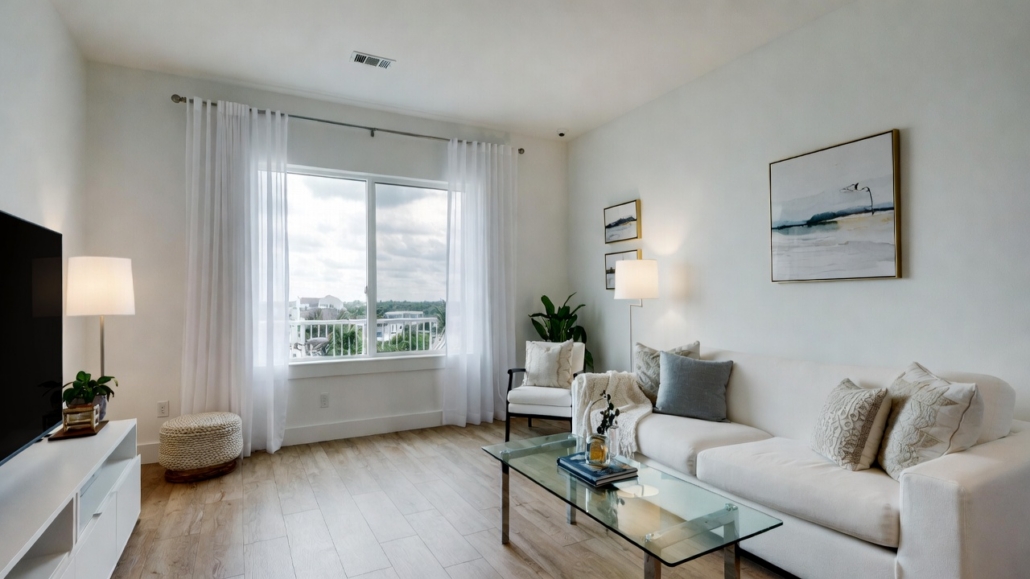
Ocean Village Fort Pierce
Ocean Village Fort Pierce: What To Know Before You Buy
- Ocean Village isn’t one condominium. A master property owners association sits over separate associations for the individual buildings and clusters, so the financials that matter are your building’s, not the community’s.
- Count the stories. Florida’s milestone inspection and reserve study rules only bite at three habitable stories and up, which splits this community roughly down the middle.
- Inventory is deep, around 52 units listed near a $299,000 median, sitting about 96 days each.
- Financing kills more of these deals than inspections do.
- Get the association documents before you write an offer.
Ocean Village isn’t one condominium, and that’s the thing to understand before you start touring. It’s a gated stretch of roughly 3,500 feet of South Hutchinson Island beachfront holding a dozen or so named sections, built out in phases since 1975, and the building you pick drives your monthly fee, your assessment exposure, and whether a bank will lend on the unit at all. Two listings behind the same gate at the same price and the same square footage can turn out to be a clean conventional close and a cash-only problem, which is why the community-level information you’ll find on most pages about Ocean Village doesn’t get you very far.
Where it sits, and why the inlet matters
The address is 2400 South Ocean Drive, Fort Pierce, on South Hutchinson Island. South of the Fort Pierce Inlet, not north.
People mix this up all the time, and it isn’t a small thing. North Hutchinson Island runs up through St. Lucie County into Indian River County, where the northern stretch starts getting called Orchid Island instead. Different tax rolls, different comps, different commute. So if you’ve been sent a stack of listings labeled “Hutchinson Island,” the first sort is which side of the inlet each one is on. For a look at what the northern stretch offers by comparison, I’ve written up Diamond Shores on Hutchinson Island separately.
From the gate you’re roughly ten minutes to Jetty Park and eleven or so to downtown Fort Pierce, the marina, and the Saturday farmers market. Vero Beach is about a half hour north.
Two associations, not one
Because the community was developed in phases, the housing stock is genuinely mixed: garden villas, town homes, low-rise buildings, high-rise towers, oceanfront units, golf-course-facing units, and detached homes, spread across named clusters including Beachtree, Catamaran, Seascape, Ocean Villas, Golf Villas, Golf Lodges, Ocean Houses, Capstan, and Southpoint. Unit sizes run from about 678 square feet up past 2,300.
That’s pleasant to shop and slightly complicated to underwrite, because you’re buying into two layers of governance. The master property owners association covers the shared amenities, the gate, the grounds, and the golf course. Your individual building or cluster association covers your roof, your structure, your building’s insurance, and your building’s reserves. Your monthly cost is both of them added together, your assessment risk sits mostly with the second one, and when a lender evaluates the property it’s largely evaluating that second one too.
Which means that when someone quotes you “the HOA fee at Ocean Village,” the useful follow-up is asking which association they’re talking about. Listing portals frequently show one layer and not the other, and that gap will find you at closing. If the villa terminology is new to you, here’s what a villa actually means in Florida, because it’s not what it means up north.
Three stories is the number to check first
Florida requires condominium and cooperative buildings of three stories or taller to complete a structural milestone inspection once the building reaches 30 years old, then every ten years after that, and the City of Fort Pierce administers those filings directly. Separately, House Bill 913, in effect since July 2025, required most buildings of three or more habitable stories to complete a Structural Integrity Reserve Study by the end of 2025 and to start funding those reserves on a set schedule. Buildings under three habitable stories fall outside both requirements.
Ocean Village has plenty of each. The high-rise towers are squarely in scope. Some of the low-rise product isn’t: one of the buildings at 2400 South Ocean Drive is a two-story, 44-unit building finished in 1980, which puts it outside the milestone and SIRS mandates altogether.
I’d be careful about reading that as a straight advantage, though. A two-story building with no reserve study can still have a tired roof and a board that’s been deferring maintenance for fifteen years, and the absence of a mandate sometimes means the absence of information. What the three-story line really tells you is that your due diligence has to be different depending on which building you choose, and a checklist that treats every Ocean Village unit the same way isn’t much of a checklist.
What the market here looks like right now
There are currently around 52 condos listed for sale in Ocean Village, at a median asking price near $299,000, with the typical listing sitting about 96 days and recent sales running near 8 a month.
That works out to roughly six months of supply. Florida single-family inventory has been running closer to 4.7 months, and six months is the traditional dividing line for a balanced market, so buyers here have time, choices, and room to negotiate off list. If you want a framework for what to actually offer rather than guessing at a percentage, my reasonable offer chart lays out how I think about it. Sellers, the flip side is that your unit is competing with fifty others behind the same gate, and the ones with complete, current association documents are the ones going under contract.
Financing is where these deals die
I’d put more of your first week into this than into anything else, and I’ll say plainly that I think most buyers get the order backwards. They tour, they fall for a unit, they write, and then somewhere around day twenty the lender starts asking questions about the association and the whole thing unravels. Touring is the easy part. The association is the deal.
Florida condo lending tightened materially in 2026 for three stacked reasons. The post-Surfside safety laws pushed inspection and reserve deadlines into 2025 and 2026. The insurance market reset master policy premiums and deductibles on a lot of older coastal buildings. And in March 2026, Fannie Mae issued Lender Letter LL-2026-03, retiring the streamlined Limited Review path for established projects and raising reserve funding expectations.
The consequence is that a building can lose what lenders call warrantable status, at which point conventional financing disappears for every unit in it. The usual triggers are reserves funded below 10 percent of the annual budget, unresolved structural findings, low owner-occupancy, active litigation, or a pending safety-related special assessment. More than 1,400 Florida condo buildings now sit on Fannie Mae’s unavailable list. When a building lands there, the buyer pool narrows to cash, portfolio lenders, and non-QM products at higher rates and larger down payments, and values follow the buyer pool down.
None of that is a claim about any particular Ocean Village association. It’s a claim about the question you should be asking, which is building by building, changes over time, and belongs in week one. Have your lender check warrantability on the specific association before you write. An agent who waves that question off is costing you money.
What the monthly actually covers
Fees here typically bundle common area maintenance, cable, internet, grounds, water, sewer, trash, and security, which is a fuller bundle than it first looks and worth remembering when you compare a condo fee against a single-family home where you’d pay all of that separately.
What it doesn’t cover is insurance on your own unit, and on a barrier island that line is not small. Wind and flood exposure drive it, and Florida premiums have kept climbing roughly 10 to 15 percent even after the litigation reforms went in. I get into the storm-risk side of Treasure Coast ownership in does Vero Beach get a lot of hurricanes, and nearly all of it applies thirty minutes south too.
The amenities
You get around 3,500 feet of private beach, a nine-hole par-3 executive course, several heated pools spread across the property rather than clustered at one clubhouse, tennis, pickleball, bocce, shuffleboard, basketball, a fitness center, and library and recreation space. FirstService Residential manages the master association.
Honestly, this is the part of the research you can safely do least of, because you can see all of it on a tour and none of it will surprise you later. One exception: the on-site restaurant and tiki bar status has been reported inconsistently, with the POA site describing a waterfront restaurant while some third-party listings still call it coming soon. If on-site food and drink is part of why you want to be here, confirm what’s actually open the week you visit rather than buying an amenity from a listing description.
Who Ocean Village suits
Ocean Village works if you want a lock-and-leave coastal base with a lot already built in, you like being able to walk to a court or a tee box, and you’re comfortable with condo governance. A large share of the inventory trades furnished or turnkey, which fits seasonal and second-home use well.
It works less well if you want a newer building with no structural questions attached, or if you need certainty about your carrying cost five years out, and it works least well if you’re counting on rental income. Lease minimums and board approval requirements are set at the association level here and some are stricter than the vacation rental listings would suggest, so verify the rules for your specific building before you underwrite a single night of revenue.
Pull these before you write an offer
- The current budget for both the master POA and your building’s association
- The most recent reserve study or SIRS, with the funding schedule
- The milestone inspection report and any phase two findings, for buildings three stories and up
- Two years of board minutes, read specifically for assessment talk and deferred maintenance
- The master insurance declarations page, including wind and flood coverage and the deductible
- Any pending or recently levied special assessment
- Rental rules: minimum lease term, leases per year, approval process
- A lender’s warrantability check on that specific association
You still want a normal unit inspection on top of all that, and my home inspection checklist for buyers covers the unit side. If the seller or the association drags its feet producing any of the above, treat the delay itself as data.
Frequently asked questions
Is Ocean Village on North or South Hutchinson Island?
South Hutchinson Island, south of the Fort Pierce Inlet, in St. Lucie County.
Does Ocean Village have one HOA fee?
No. There’s a master property owners association fee plus a separate fee from your individual building or cluster association, and you need to budget for both.
How old are the buildings?
The community dates to 1975 and was developed in phases afterward, so ages vary by section, with some low-rise buildings finished around 1980. Confirm the certificate of occupancy year for your building, since that starts the milestone inspection clock.
Can you finance an Ocean Village condo?
Often, but it depends on your specific association’s reserves, insurance, owner-occupancy ratio, and litigation status rather than on the community as a whole. Run warrantability before you go under contract.
Can you rent out an Ocean Village condo?
Depends on the association. Check minimum lease terms, annual limits, and board approval.
What’s included in the association fee?
Commonly common area maintenance, cable, internet, grounds, water, sewer, trash, and security. Insurance on your own unit is separate.
If you’re shopping Ocean Village
I’m a licensed Florida real estate agent in Vero Beach, and Fort Pierce and Hutchinson Island are part of the area I cover. Send me a unit you’re considering and I’ll tell you which association governs it, what the full fee stack looks like, and whether the building has a financing problem, before you get attached to it. No charge for that.
Call or text (772) 999-4457, or get in touch here. The rest of what I do is on the main page.
Related reading


Leave a Reply
Want to join the discussion?Feel free to contribute!