
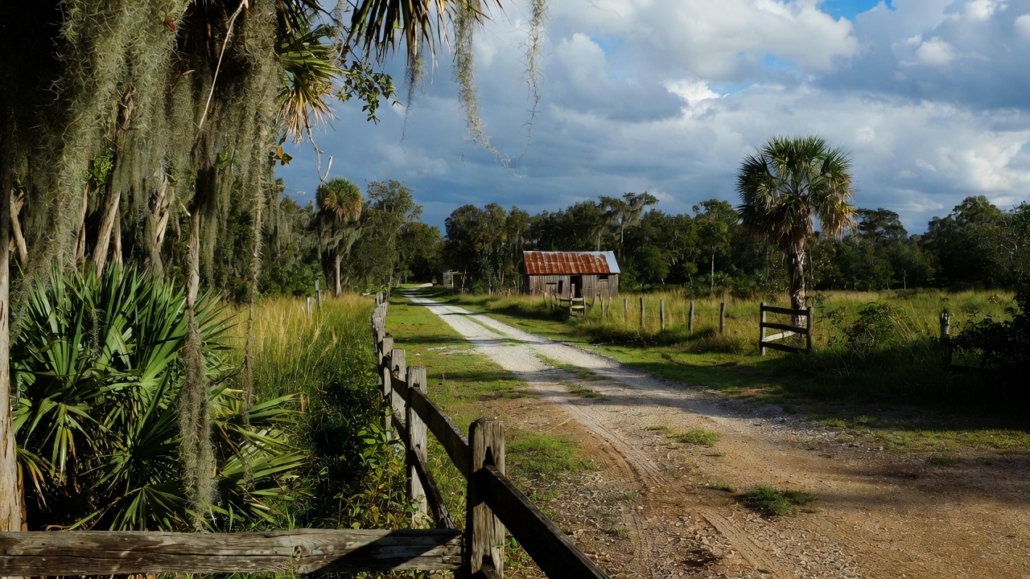
Ranches In Indian River County
Ranches in Indian River County: What They Cost and How They Make Money
- Ranch listings in this county have ranged from roughly $3,950 an acre for working cattle pasture to $55,000 an acre for a former grove already carved into ranchette parcels.
- The gap is not about land quality. It is about which side of the development path the parcel sits on.
- Cattle is carrying the income story right now. USDA and UF/IFAS numbers show Florida calf prices in early 2026 running about 59% above the prior year, off the smallest national herd since 1951.
- Citrus is not the income story anymore. Statewide production acreage has fallen about 75% since 2020.
- Your property tax outcome depends on Florida’s agricultural classification, which does not transfer with the deed and has a March 1 filing deadline.
Two Indian River County listings, both marketed as ranches. One was a working cattle operation with cow pens in the middle and lanes running through, priced at $3,950 an acre. The other sat a quarter mile east of I-95 near Sebastian, 143 acres of former citrus grove already split into thirty ranchette parcels, priced at $55,000 an acre.
Fourteen times the price, same county, same rainfall, similar dirt. If you understand why, you understand this market.
Four different things people call a ranch
Ranchettes, 5 to 20 acres. Mostly east of I-95 or just west of it, usually zoned A-1, which in this county runs around one dwelling unit per five acres. A recent one: 18.73 acres, cleared and cross-fenced, electric and water in, a pond, a 1925 Cracker cottage and a 125 by 36 barn. That is the Treasure Coast small ranch in its purest form, and I wrote about the Cracker house style separately if the architecture is what pulled you in.
Small working tracts, 40 to 150 acres. Pasture, pushed grove, sometimes sod. Real income at a scale one family can run.
Mid-size, 150 to 600 acres. Pens, lanes, pump stations, an operator on site. A 298.5-acre turnkey pasture with Oslo Road frontage and infrastructure staged for conversion to sod or row crop came to market with an adjacent 300 acres available beside it.
Institutional, 600 acres and up. One local grove alone runs 598 acres and sits contiguous to a 2,600-acre tract, which means somebody with a fund behind them could assemble past 3,200 contiguous acres. Different buyer entirely.
A warning on comparison shopping. Aggregator sites report an average Indian River County land price north of $118,000 an acre, which sounds absurd until you realize the figure is dragged upward by quarter-acre building lots in places like Vero Lake Estates. Filter to ranch listings only and the average drops to somewhere near $12,800. Neither number describes any specific parcel you would want to buy.
For scale, roughly 8,000 acres of land have been listed here recently against about $961 million in asking price, putting the county 13th of Florida’s 67 for rural acreage on the market.
How the land earns
Cattle. Most Florida ranches run cow-calf, meaning you breed cows, calves hit the ground, and you sell them at weaning or as yearlings. UF/IFAS put Florida calf prices in late January 2026 at 59% above the prior year and 76% above 2024, with cull cows up 27% year over year. The driver is scarcity. USDA’s January inventory report counted 86.2 million head nationally, the smallest number since 1951. Florida runs around 1.58 million head. Producers I talk to are not celebrating, though, because feed and drought are eating a good chunk of the price improvement.
Sod and hay. Unglamorous, steady, and where a lot of pushed grove land ends up. Sod moves with Florida homebuilding, so it carries its own cycle.
Leasing to an operator. What most out-of-state investors do. You hold the dirt, a working rancher runs the cattle, and the lease is what keeps your agricultural classification alive. The lease has to be in effect January 1 of the tax year to count, which people learn the hard way.
The growth path. The 66th Avenue and Oslo Road corridors are where ag land quietly stops being ag land. That transition is the same force pushing land values across Vero Beach.
Then there is citrus, and I would rather you hear this from me than from a listing sheet. The Indian River name still means something on a grapefruit crate. The economics behind it are gone. USDA reported the 2025-2026 season opening with 208,183 acres statewide, down 24% in a single year and down roughly 75% since 2020. Across 25 years of greening, hurricanes and development, orange production fell 94% and grapefruit 97%. Florida shipped 244 million boxes of oranges in 1998 and forecast 12 million this season. Grapefruit went from 50 million boxes to about 1.2 million. If a listing calls something a producing grove, ask for five years of yield records before you assign it a dollar of value.
The tax classification decides your carrying cost
Florida Statute 193.461, the Greenbelt Law, allows land in bona fide commercial agricultural use to be assessed on use value instead of market value. The difference on a few hundred acres is not a rounding error. It is the difference between a hold you can sustain and one you cannot.
Three things buyers miss:
- The classification does not ride along with the deed. Any ownership change means a new application for the following year. Close in April, miss the March 1 window, and you can spend a full year assessed at market value.
- The property appraiser can ask for financial records, a management plan and your lease, and can deny you. Your recourse is the Value Adjustment Board, then circuit court.
- Pleasure horses do not qualify. Two horses on ten acres is a hobby. Appraisers see the difference every day.
Price the tax bill both ways before you sign anything. Classified and unclassified. If the unclassified number breaks you, what you are buying is a bet on a government office approving your paperwork.
Pros and cons, stated plainly
The case for it: carrying cost stays low with classification in place, which is what makes a long hold possible in the first place. The cattle side is the strongest it has been in a decade. Nobody builds a subdivision against your east fence without buying you out first. Florida has no state income tax, which matters on the exit. And there is a hard limit on how much land exists west of Vero.
The case against it is mostly liquidity and effort. A 300-acre tract does not sell like a three-bedroom in Central Beach, and marketing time runs in quarters rather than weeks. Financing is its own project since ag land does not conform, so you are looking at Farm Credit, a portfolio lender, or a seller carry. I have written more on how owner financing works in this market. Operating expense never stops: fence, water control, exotic vegetation, equipment, labor. Weather is a real line item, both wind and water, and how hurricanes behave on this stretch of coast is worth understanding before you assume the barn survives.
The one nobody warns you about is that the lifestyle is a job. Lease it out for two seasons before you commit to running it yourself.
Due diligence, in the order I would do it
Water comes first. Which drainage or improvement district is the parcel in, what is the assessment, what permits exist through the water management district, who maintains the ditches, is there a pump station and what is its capacity.
Then taxes. Pull three years of bills and the current classification status, then call the Property Appraiser’s office and ask directly what they would require from a new owner. That five-minute call has saved buyers five figures.
Then the lease, if there is an operator on the ground. Read the document, not the summary. Term, renewal, maintenance obligations, who owns the improvements.
After that: soil and prior use, because a former grove carries decades of chemical history and you want the environmental work done. Zoning and density, because A-1 at one unit per five acres and A-3 at one per twenty tell completely different exit stories on identical acreage. Deeded access with a current survey, not a handshake with the neighbor. And a clear decision on whether you are buying an operation or buying dirt, since turnkey with pens and a lease in place costs more and is usually worth it.
One more thing. Talk to the operator before you talk to the listing agent. Whoever runs cattle on that pasture knows what the ground floods like in September.
Where the ranch land sits
Most working acreage is west of I-95, running out toward Fellsmere and the Blue Cypress area. The transition zone, where ag land is turning residential, tracks 66th Avenue, Oslo Road and the corridors feeding Sebastian. That is where you see the $55,000 numbers. You do not see them out west.
If the broader question is why people keep landing here, start with why people move to Indian River County or the Vero Beach relocation guide. If you want acreage and a house rather than an operating ranch, I keep a running view of homes with land in this market.
Working with me
I represent buyers on land and ranch property in Indian River County and across the Treasure Coast, including investors who care more about the hold than the sunset. Send me a parcel number through the contact page and I will give you a straight read on it, including what the tax picture looks like the day after closing.
Related reading:


Leave a Reply
Want to join the discussion?Feel free to contribute!