
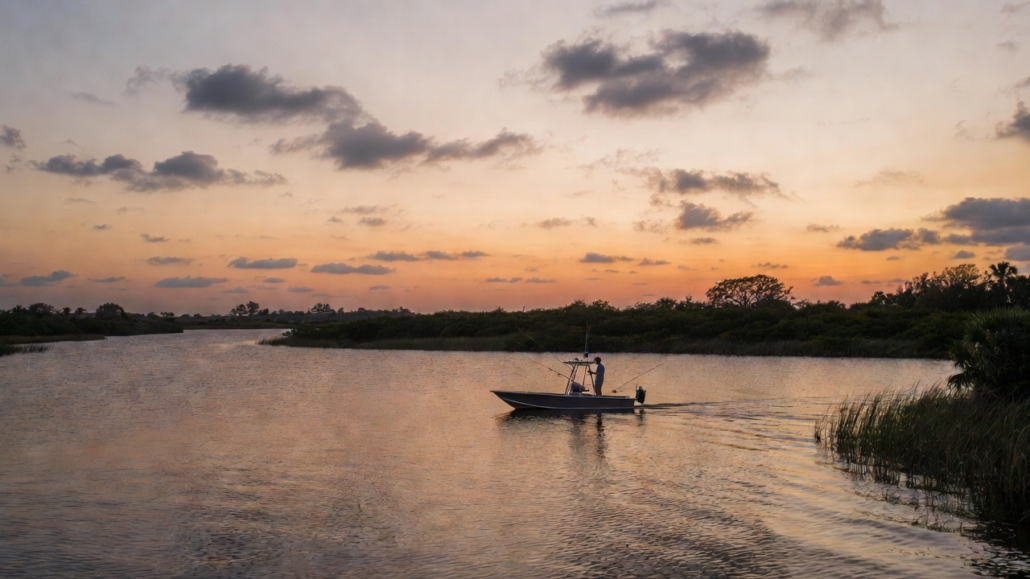
Vero Beach Fishing
Vero Beach Fishing: A Local Guide to Salt Water and Fresh Water
- Vero Beach sits on the Indian River Lagoon, which means shallow-water snook, redfish, and trout are usually a ten minute drive from wherever you’re staying.
- There’s no inlet in Vero itself, so running offshore means a trip north to Sebastian Inlet or south to Fort Pierce Inlet, and that one fact should shape where you buy if boating is a priority.
- Fresh water is the part most visitors miss. Headwaters Lake and Stick Marsh sit roughly 30 miles northwest and hold some of the best largemouth bass water in the state.
- You can fish here productively with zero boat, zero guide, and about $40 in gear from a causeway park.
- Waterfront listings vary wildly in usable water depth and bridge clearance, and the MLS photos won’t tell you which is which.
Most fishing guides for this area are written by charter booking sites that want you to book a charter. Fair enough. But I’ve been selling real estate here on the Treasure Coast, and the questions I get from buyers aren’t “what’s biting.” They’re “can I keep a 24 foot center console behind this house,” and “how far is it to open water,” and “is the fishing here as good as people say.”
Short answer to the last one: yes, and it’s better than the marketing suggests, because the fresh water half of the equation barely gets mentioned.
What you can actually catch here
The Indian River Lagoon runs the entire length of Indian River County. It’s shallow, mostly 2 to 6 feet outside the Intracoastal channel, with grass flats, oyster bars, mangrove shorelines, and several thousand private docks. That combination is why the lagoon fishes the way it does.
Inshore, the main targets are snook, redfish, spotted seatrout, black drum, flounder, mangrove snapper, sheepshead, jacks, and ladyfish. Tarpon show up seasonally. Around the inlets you’ll add cobia, permit, and tripletail to that list.
From the beach, the surf gives up pompano in the cooler months, whiting year round, and bluefish and Spanish mackerel when the bait’s running. The fall mullet run, usually September into October, is the single best shot most people get at a big snook or a tarpon without owning a boat.
Offshore, past the nearshore reefs and out toward the Gulf Stream, you’re into kingfish, mahi, sailfish, wahoo, snapper, and grouper. That’s a boat-and-captain proposition for most people.
Fresh water gets you largemouth bass, black crappie, bluegill, redear sunfish (locals call them shellcrackers), bowfin, and catfish. Some of those bass are big enough that people drive here from Georgia and Alabama to chase them.
Vero Beach fishing in salt water without a boat
This is where the free guides usually get vague, so here’s the specific version.
Sebastian Inlet State Park is about 15 miles north of downtown Vero. The north jetty is one of the better known snook spots on Florida’s east coast, and it’s crowded for a reason. Spring and summer nights around a moving tide are the classic window. Park entrance fee applies and the lot fills early on weekends. If you’re headed that direction anyway, there’s more to do up there than fish, which I covered in the Sebastian things to do guide.
Wabasso Causeway Park sits where CR 510 crosses the lagoon. Bank access on both sides, easy parking, and it fishes well for trout, jacks, snapper, and the occasional redfish. Good spot to take a kid because you’re never more than 40 feet from the car.
Round Island Park has an ocean side and a lagoon side. The river side has a launch and shoreline access with mangroves and grass right there. The ocean side is beach fishing.
Riverside Park and MacWilliam Park put you on the lagoon near the Barber Bridge, and the seawall and pier areas there hold fish, particularly sheepshead in winter around any structure with barnacles on it.
The beaches. Every public beach access in Vero holds fish. Don’t overthink which one. Look for diving birds, bait flipping, or a trough where the water’s a shade darker, and fish that. If you want the full list of accesses and parking situations, the Vero Beach beaches guide breaks them down. Worth knowing that the same sandbar structure that makes for decent surf here is what creates the troughs pompano sit in.
Fort Pierce Inlet is roughly 25 miles south and gives you jetty access to moving inlet water without the Sebastian crowd, though the drive is longer from most of Vero.
Vero Beach fishing in salt water with a boat
Vero Tackle & Watersports at 3321 Bridge Plaza Drive is the closest thing the island has to a one-stop shop. Tackle, bait, rentals, and inshore charters that run out of the lagoon. Charter rates around here generally land between $500 and $800 for a half day inshore trip depending on party size, and the fishing license is usually covered under the vessel’s license, which saves you a step.
Public ramps: MacWilliam Park and Riverside Park in Vero, Round Island Park to the south, and several in Sebastian to the north. Sebastian’s ramps are the ones you want if you’re headed for the inlet.
If your goal is offshore, be honest with yourself about the run. Vero has no inlet of its own. From a Vero dock, you’re idling the Intracoastal north or south for 30 to 60 minutes before you even see open ocean. On a calm day that’s pleasant. In November with a north wind, it’s a chore.
For something with a captain, a crew, and no cleanup, charter options up and down the Florida coast run the range from six-pack fishing boats to full yacht days.
Fresh water: the part nobody tells visitors about
Vero Beach fishing secret: Drive 30 minutes northwest and you’re in a completely different fishery.
Headwaters Lake (also called Fellsmere Reservoir or Lake Egan) is a 10,036 acre manmade reservoir in Indian River County, less than 10 miles west of Fellsmere off I-95. It was built on former farmland and citrus groves and stocked heavily. Bass, black crappie, bluegill, redear sunfish, bowfin, and gar. Hydrilla, reed lines, lily pads, and drifting hyacinth mats give you endless target structure. There’s a boat ramp with paved parking and restrooms, but no gas, no bait, no store, so load up before you turn off the pavement. Hours run from an hour before sunrise to an hour after sunset, there’s a 25 mph limit on the reservoir, and the district closes the ramp on certain weekdays during the warm months. Check the current schedule before you tow anything out there.
Stick Marsh / Farm 13 sits adjacent, 6,500 acres of impoundment with water 4 to 8 feet deep. It was the famous one before Headwaters existed. Largemouth bass here are catch and release only. Bluegill and shellcracker fishing along the levees is excellent and criminally underrated, especially with live crickets in spring.
Blue Cypress Lake is about 22 miles west of Vero on SR 60, and it’s the prettiest water in the county by a wide margin. Cypress trees standing in open water, one of the densest osprey nesting populations in North America, bass and crappie. Middleton’s Fish Camp is the access point. Even if you don’t catch anything, the sunrise out there is worth the drive.
The canals. Indian River County is laced with drainage canals, and the Main Relief Canal running through Vero holds bass, tilapia, and, where it meets brackish water near the lagoon, snook. Nobody fishes them. That’s the point.
Neighborhood lakes. A lot of the inland communities have retention lakes stocked or self-stocked with bass and bluegill. Vero Lake Estates and similar inland areas are full of water you can walk to with a spinning rod after dinner.
Licenses, seasons, and the rules that trip people up
Florida saltwater and freshwater licenses are separate purchases. Buying one doesn’t cover the other, and plenty of visitors find that out from an FWC officer.
Florida residents fishing from shore in salt water need a shoreline license. It’s free, but it’s not optional, and you still have to go get it. Vero Beach fishing requires a license.
Snook require a separate snook permit on top of your saltwater license, and the Atlantic coast season closes December 15 through January 31 and again June 1 through August 31. Slot limits are tight. Redfish rules have changed several times in recent years on this stretch of coast. Check myfwc.com the week you plan to fish rather than relying on what a guy at the ramp tells you.
Charters with a licensed captain cover you under the vessel license. Rental boats generally don’t.
Season by season, roughly
Winter brings sheepshead stacked on every piling, pompano in the surf, and the best trout fishing of the year on the flats when the water’s cold and clear. Bass on Headwaters get aggressive as the spawn approaches.
Spring is snook waking up, tarpon showing at the inlets, and shellcracker beds along the Stick Marsh levees.
Summer means fish early or fish at night. Snook season is closed most of it anyway. Offshore is at its calmest.
Fall is the best of it. The mullet run turns the beach into a feeding zone, redfish school up, and the whole lagoon turns on for about six weeks.
What the Vero Beach fishing situation means if you’re buying a house here
Here’s the part the fishing blogs won’t cover, and it’s the reason people email me.
Water access on a Vero listing means about five different things. A canal lot in Vero Isles with a private dock and a lift is a different animal from a “water view” lot on a retention pond, which is different again from a community with a shared day dock.
Three things to check before you fall in love with a waterfront listing:
- Depth at low tide, not at the showing. Canal depths in the older neighborhoods vary a lot, and a foot of muck at mean low water will keep your boat on a trailer. Go back at low tide with a push pole or a weighted line.
- Bridge clearance between your dock and open water. The fixed spans over the lagoon run around 65 feet at the ICW channel, but a lot of canal-mouth and neighborhood bridges are far lower. Measure the tallest point of the boat you actually want, including the T-top and antennas.
- What the HOA allows. Some of the country club communities restrict lift size, boat length, or overnight boat storage in ways that surprise people. It’s in the docs, and almost nobody reads the docs before making an offer.
[Insert Jon’s story here about the buyer who checked the canal depth at high tide and discovered the problem after closing.]
My honest read, and it costs me business to say it: if offshore fishing is the whole reason you’re moving, buy north of Vero, closer to Sebastian Inlet. The ten to twenty minutes you save on every single run adds up to the difference between going out and not going out. Vero’s lagoon-side neighborhoods are better for the person who fishes flats and canals, entertains on the water, and goes offshore a handful of times a year.
The communities worth looking at for real boat access are covered across the Vero Beach communities pages, and if you’re still figuring out whether the Treasure Coast is the right stretch of Florida for you at all, start with the Vero Beach relocation guide.
Common questions
Do I need a boat to fish Vero Beach?
No. Between Sebastian Inlet, the causeway parks, the beaches, and the freshwater canals, you can fish productively here for years without owning one. A kayak opens up the mangrove shorelines and oyster bars that boats can’t reach anyway.
Is the Indian River Lagoon still healthy?
It’s been through seagrass die-offs and algae blooms over the last decade, and the recovery is uneven. The Vero stretch fishes better than a lot of the lagoon to the north. Fish are still there. Anyone who tells you the lagoon is either fine or finished is selling something.
What’s the best single day trip for someone visiting?
Morning inshore charter out of the lagoon, then lunch on the water. If you’d rather be casting than being driven around, take a rental kayak into the mangroves at Round Island.
Can I eat what I catch?
Yes, within the regulations, and Florida publishes fish consumption advisories worth a look for certain species. If you’d rather someone else handle it, the seafood restaurants around town source locally and several will cook your catch.
If you’re looking at waterfront property to support your Vero Beach fishing efforts
I’m a licensed Florida real estate agent with The Real Brokerage in Vero Beach, and I spend a fair amount of my time walking docks and checking canal depths with buyers before they write an offer. If you’re trying to figure out which neighborhoods put you closest to the water you actually want to fish, get in touch and I’ll tell you straight, including when the answer is a town other than this one.
Related reading


Leave a Reply
Want to join the discussion?Feel free to contribute!