
Florida Hurricane Insurance And Flood Insurance
Florida Hurricane Insurance and Flood Insurance: Who Pays for What
- Florida hurricane insurance (the wind part of your homeowners policy) and flood insurance are two separate policies, two separate claims, and two separate deductibles, even when one storm causes all the damage.
- Wind and wind-driven rain go to your homeowners carrier. Storm surge and rising water go to your flood carrier. The adjusters decide which is which, and that split is where most fights happen.
- Your hurricane deductible is a percentage of your dwelling coverage and applies once per calendar year. On a $400,000 policy at 2%, you pay $8,000 before wind coverage pays anything.
- Flood policies have a 30-day waiting period, and nobody will bind new coverage once a storm is in the cone, so buy it in April, not September.
- Citizens now requires flood coverage on most of its wind policies, and starting January 1, 2027, the rule covers every Citizens residential policy that includes wind.
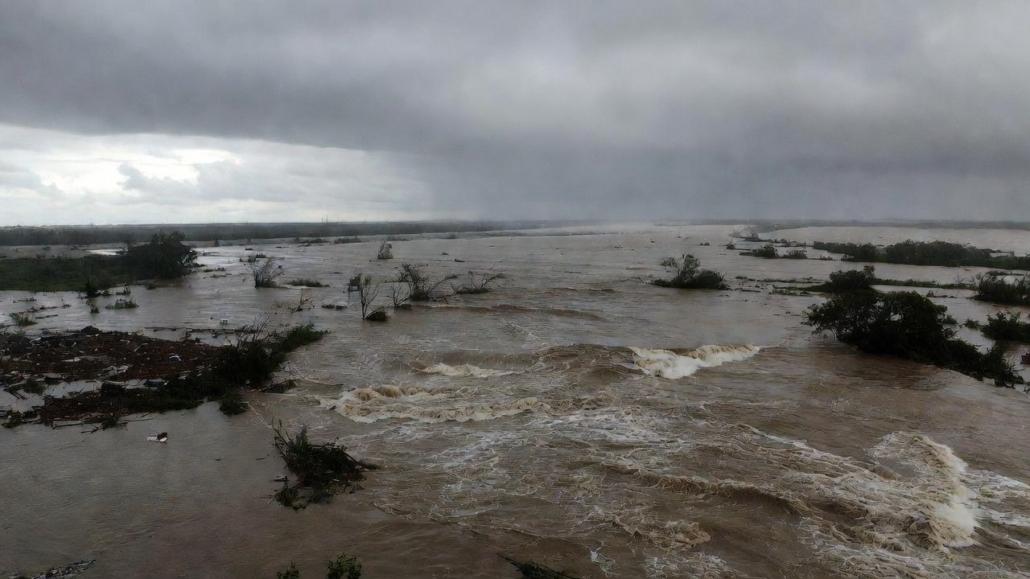
Picture a house on the river side of A1A after a Category 2. The wind tore off a section of shingles and rain poured into the attic. Then the surge pushed 14 inches of water through the ground floor. That’s one storm and one house, but it’s two claims, two adjusters, and two deductibles, and the owner is about to learn how Florida hurricane insurance and flood insurance actually split the bill.
I wrote a separate post on what Vero Beach home insurance costs if premiums are your question. This one is about what happens after the storm, when you file.
What your homeowners policy covers in a hurricane
Most Florida homeowners don’t have a standalone “hurricane policy.” When people say hurricane insurance, they mean the windstorm coverage inside a standard HO-3 policy. Some owners on the barrier island carry a wind-only policy through Citizens alongside a separate policy for everything else, but it works the same way.
Wind coverage pays for:
- Roof damage, including shingles, tiles, and decking torn loose
- Water that gets in because the wind opened the house first (a blown-out window, a peeled roof)
- Fences, screen enclosures, and other structures, usually at a lower limit
- Your belongings damaged by that wind or wind-driven water
- Somewhere to live if the house isn’t livable during repairs
Tornadoes that spin off a hurricane count as wind too. That mattered in 2024, when Milton dropped tornadoes across the Treasure Coast. I covered that storm and the rest of our local record in does Vero Beach get a lot of hurricanes.
Wind coverage won’t pay for water that came up from the ground or in from the ocean. That’s flood, and your homeowners carrier will deny it every time.
What flood insurance covers
Flood insurance pays when water rises and enters the house. Storm surge. A canal overtopping. Heavy rain that pools in the yard and comes in under the doors. You don’t need a hurricane at all. A slow tropical storm that sits over Indian River County for two days can do it.
Most Florida flood policies come from the National Flood Insurance Program (NFIP). An NFIP policy caps out at:
- $250,000 for the building
- $100,000 for contents, and only if you bought contents coverage, which is a separate line
The gaps are what surprise people. A standard NFIP policy doesn’t pay for somewhere to stay while your house dries out. It pays for very little in ground-level enclosures under an elevated home, which is a big deal on the island, where a lot of houses have a garage and storage under the living floor. Pools, decks, and landscaping are out. Contents usually pay depreciated value, so the eight-year-old couch comes back as a small check.
Private flood policies fill some of those holes. Many offer higher building limits, which matters if your rebuild costs more than $250,000, and some include living expenses and replacement cost on contents. Private flood can come in cheaper or pricier than NFIP depending on your elevation. Get both quotes.
Wind vs. water: where claims turn into fights
When a house has both kinds of damage, each adjuster’s job is to figure out what their policy owes and nothing more. The wind adjuster looks at the waterline on your drywall and says flood. The flood adjuster looks at the ceiling stains and says wind.
If you only carry one policy, you’ve got a real problem. Whatever the adjuster blames on the other cause goes unpaid.
A few things help:
- Carry both policies, ideally with the same agent, so one person is on your side of both claims.
- Photograph and video the whole house before the season starts. Every room, the roof if you can get a drone up, the inside of closets.
- After the storm, document before you clean. Shoot the waterline, the roof, and anything torn or missing before you pull a single piece of wet carpet.
- Write down times. If the roof went at 2 a.m. and the surge came at 5 a.m., that timeline helps sort wind from water.
[ADD: a real example from a client or neighbor where the wind/water split changed a payout, if you have one]
The hurricane deductible, in real dollars
Your regular deductible (often $1,000 or $2,500) covers a kitchen fire or a burst pipe. It doesn’t apply to hurricane damage. Florida policies carry a separate hurricane deductible, figured as a percentage of your dwelling coverage (Coverage A), not the sale price and not the market value.
Florida carriers have to offer $500, 2%, 5%, and 10% options. Most people end up at 2% or 5% because the $500 option is priced out of reach. Here’s what that looks like:
| Dwelling coverage | 2% deductible | 5% deductible | 10% deductible |
|---|---|---|---|
| $300,000 | $6,000 | $15,000 | $30,000 |
| $400,000 | $8,000 | $20,000 | $40,000 |
| $750,000 | $15,000 | $37,500 | $75,000 |
Two rules work in your favor:
- It applies once per calendar year. If two hurricanes hit in the same season, like Frances and Jeanne did here in 2004, you pay the hurricane deductible once. The second storm falls under your regular deductible.
- It only applies during the hurricane window. That starts when the National Hurricane Center issues a hurricane watch or warning anywhere in Florida and ends 72 hours after the last one is lifted. A windstorm in March gets your regular deductible.
Your flood policy has its own deductible, completely separate. So the house on A1A pays the hurricane deductible on the wind claim and the flood deductible on the water claim. Keep cash for both.
Timing: when you can and can’t buy coverage
This part costs buyers the most, because it’s easy to fix early and impossible to fix late.
The 30-day wait. NFIP flood policies don’t take effect until 30 days after purchase. The main exception is a policy bought when you make, increase, or renew a mortgage, which can start at closing. If you already own the house and decide in August you want flood coverage, you’re exposed until September.
Binding freezes. Once a named storm threatens Florida, carriers stop writing new policies and stop raising limits until it passes. If you’re closing the week a storm shows up in the cone, your closing can stall because nobody will bind the homeowners policy. I tell buyers to get insurance quotes during the inspection period, not the week before closing. Timing on the rest of the process is in my post on how long it takes to close on a house.
NFIP authorization. Congress has kept the NFIP running on short-term extensions since 2017, and the current one expires September 30, 2026. During a lapse, existing policies still pay claims, but the NFIP can’t write new policies or renew old ones. A buyer can take over the seller’s existing NFIP policy, and private flood isn’t affected. [ADD: check status before publishing and update this paragraph]
Filing deadlines. Florida gives you one year from the date of loss to file a new homeowners claim, and 18 months for a reopened or supplemental claim. NFIP wants a signed proof of loss within 60 days. Don’t sit on either.
The Citizens flood rule
Citizens is Florida’s state-backed insurer, and it doesn’t sell flood coverage. Since 2023 the Legislature has been phasing in a rule that Citizens customers with wind coverage must carry flood insurance anyway. Homes in FEMA’s high-risk flood zones came first. After that the trigger dropped by dwelling value each January, reaching $400,000 on January 1, 2026. On January 1, 2027, it covers every remaining Citizens residential policy with wind coverage, whatever the value and whatever the flood zone.
If you’re with Citizens and haven’t bought flood, your next renewal is the deadline. Citizens accepts an NFIP policy or an approved private one, and the flood limit has to match your Citizens dwelling limit or the NFIP maximum, whichever is lower. Private carriers don’t have this rule, but most of them care about flood anyway.
What I’d do if I were buying in Florida this year
Buy flood insurance whether you’re in a flood zone or not. Zone X means lower risk, and lower isn’t zero. X-zone flood policies also tend to be the cheapest you’ll see. Pick a hurricane deductible you could pay tomorrow, and keep that amount in a savings account you don’t touch between June and November.
Before you write an offer, ask for the seller’s elevation certificate if one exists, their current flood premium, and a recent wind mitigation and four-point inspection. The first two tell you what flood will cost. The third tells you whether you can get wind coverage at all and what discount the house earns. Add them to your home inspection checklist.
If you’re buying a condo, the association’s master policy covers the building. Find out its hurricane deductible, because a big one can come back to owners as a special assessment. More on that in buying a condo in Florida.
If you’re looking at a house in Vero Beach and want me to pull the flood zone and line up quotes before you commit, reach out here. I’d rather you know the insurance picture on day one than on day 28.

Leave a Reply
Want to join the discussion?Feel free to contribute!