
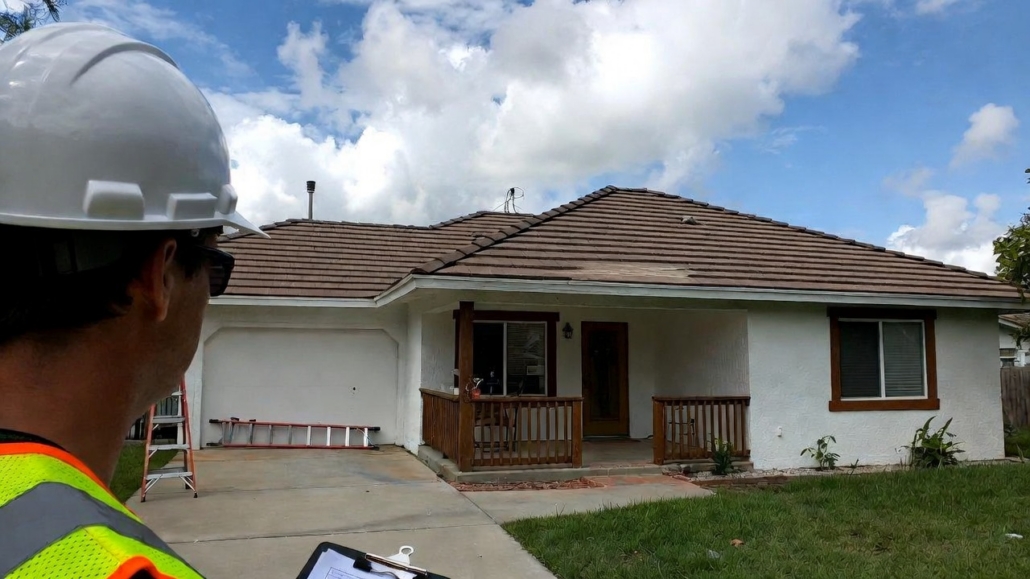
What Are Wind Mitigation and Four-Point Inspections?
What Are Wind Mitigation and Four-Point Inspections? A Florida Agent Explains
- A four-point inspection checks the roof, electrical, plumbing, and HVAC, and insurance companies use it to decide whether they’ll write a policy on your home at all.
- A wind mitigation inspection documents your home’s hurricane-resistant features on Florida’s standardized OIR-B1-1802 form, and insurers are required by law to give you discounts for what it finds.
- Simple way to remember it: the four-point determines whether you can get insurance, and the wind mitigation determines how much you’ll pay for it.
- Both inspections together typically cost $150 to $300 when bundled, take under an hour, and a good wind mit report often pays for itself in the first year. The report is valid for five years.
- Florida rolled out a new wind mitigation form in April 2026 with tighter documentation requirements, so if you’re due for a fresh report, expect more photos and slightly higher inspection prices than the old numbers you’ll see quoted online.
If you’re buying a home in Florida, at some point your insurance agent is going to ask for a four-point and a wind mit. If you’re moving here from out of state, neither of those terms means anything to you yet. They will soon, because these two inspections have more influence over your insurance situation than almost anything else about the house.
I’m a licensed real estate agent in Vero Beach, and I watch these two reports shape transactions all the time. Sometimes they save my buyers real money. Sometimes they surface a problem that becomes a negotiation. Occasionally they blow up an insurance quote a week before closing. So here’s what each one is, what inspectors actually look at, and how to use them to your advantage instead of getting surprised by them.
The one-sentence difference in wind mitigation and four-point inspections
A four-point inspection tells the insurance company whether your home is insurable. A wind mitigation inspection tells them how big a discount you’ve earned on the windstorm portion of your premium.
One is a gate. The other is a coupon. You want to pass through the gate and stack as many coupons as the house allows.
What a four-point inspection covers
The name is literal. A licensed inspector does a limited visual review of four systems:
- Roof. Age, material, condition, and remaining useful life. In Florida, this is the item insurers care about most.
- Electrical. Panel brand, wiring type, and overall condition. Certain panels (Federal Pacific and Zinsco are the famous ones) and certain wiring types can make a home hard to insure until they’re replaced.
- Plumbing. Pipe materials, water heater age, and visible leaks. Polybutylene piping, common in homes built from the late 1970s through the mid 1990s, is a frequent flag.
- HVAC. Age and working condition of the heating and cooling system.
This is not a full home inspection. It’s a short, insurance-focused snapshot, and it exists for the carrier’s benefit, not yours. The insurer wants to know the approximate age and condition of the systems most likely to generate a claim before they agree to take on the risk.
When you’ll need one: almost always on older homes. The age threshold varies by carrier. Some want a four-point on anything over 20 years old, others draw the line at 25, 30, or 40. Citizens, the state-backed insurer, requires one on homes 30 years and older. If you’re buying an older home anywhere in Florida, just assume you’ll need a four-point to bind a policy.
What can go wrong: if the four-point turns up an aging roof, a problem panel, or polybutylene pipes, the carrier can decline to write the policy or require repairs first. And since your lender won’t let you close without insurance in place, a bad four-point is not just an insurance problem. It’s a closing problem. This is exactly why I tell buyers to deal with these reports during the inspection period, which I’ll get to below.
What a wind mitigation inspection covers
A wind mitigation inspection (everyone here calls it a “wind mit”) documents the construction features that help your home resist hurricane-force wind. The inspector records everything on a standardized state form, the OIR-B1-1802, which every insurance carrier in Florida is required to accept.
The inspector evaluates seven things:
- Building code. Homes permitted under the post-Andrew Florida Building Code (March 2002 and later) score better automatically.
- Roof covering. The material, its age, and whether it was installed to code.
- Roof deck attachment. How the decking is nailed to the trusses. Nail size and spacing actually matter here.
- Roof-to-wall connection. Toe-nails, clips, single wraps, or double wraps. Stronger hardware earns bigger credits.
- Roof geometry. A hip roof, the kind that slopes on all four sides like a pyramid, earns a discount that a gable roof doesn’t.
- Secondary water resistance. A sealed barrier under the roof covering that keeps water out if shingles blow off. Common on roofs installed in the last several years.
- Opening protection. Impact windows, rated shutters, and rated garage doors. This one is all or nothing: every single opening has to be protected to earn the credit.
Here’s the part that matters for your wallet. Under Florida law, insurers must give you premium discounts for verified wind mitigation features. This isn’t a courtesy. It’s Florida Statute 627.0629. The credits apply to the windstorm portion of your premium, which in a hurricane state is a big share of the total bill, and for a well-built or well-hardened home the combined credits can be dramatic. I’ve seen wind mit reports cut four figures off an annual premium. A $100 to $175 inspection that saves you $500 to $2,000 a year, every year, for five years, is the best return on investment in Florida homeownership.
One thing a wind mit is not: a pass-fail test. You can’t fail it. It simply documents what the house has. Worst case, it finds nothing creditable and you’re out the inspection fee.
The 2026 form change nobody’s telling you about
Most articles on this topic were written years ago and never updated. Here’s what’s current: Florida’s Office of Insurance Regulation adopted a revised wind mitigation form that became mandatory on April 1, 2026. The update was based on newer wind-loss research, and the practical effects are tighter documentation requirements (more photos, permit records, and product approval numbers), some new options for crediting engineered retrofits, and updated discount tables.
Two things to know. First, if you have an existing wind mit report from before April 2026, it generally remains valid for its full five-year window as long as you haven’t made structural changes. Second, new inspections take a bit longer and cost a bit more than the old quoted prices because inspectors have more to document. Budget accordingly and don’t be surprised when the number is higher than what a 2019 blog post told you.
Do you need both?
If you’re buying an older home in Florida, yes, and you should order them together.
The four-point will likely be required by your carrier anyway. The wind mit is technically optional, but skipping it means voluntarily paying full price on your windstorm coverage, which nobody should do. Most inspectors bundle both into a single visit for somewhere in the range of $150 to $300 total, and the whole thing takes under an hour. If you’re already paying for a full buyer’s home inspection, adding both to the same appointment is the cheapest way to do it. My home inspection checklist for buyers covers how these fit into the larger inspection picture.
Existing homeowners should think about a wind mit too, not just buyers. If you’ve replaced your roof, added impact windows, or never had one done, you’re probably leaving discounts on the table. And Florida’s My Safe Florida Home program has offered free wind mitigation inspections and matching grants for hardening upgrades, which is worth checking before you pay out of pocket.
How I use these reports in a real transaction
This is the part the inspection company blogs won’t tell you, because they’re not in the room when the deal gets negotiated.
Order them during your inspection period, not after closing. On Florida’s standard AS-IS contract, your inspection period is your clean exit. If the four-point reveals a roof the carriers won’t touch or a panel that needs replacing, you want to know while you can still renegotiate or walk, not after you own the problem. I have my buyers run the four-point and wind mit alongside the general inspection, then get the reports to an insurance agent for real quotes before the inspection period expires.
Use the findings to shape your number. An uninsurable roof or a $4,000 repanel job is a legitimate negotiation item, the same as any other material defect. My reasonable offer chart walks through how condition issues should move your offer.
Ask the seller for their existing reports. Wind mit reports are good for five years. If the seller has a recent one, you can hand it to your insurance agent for quoting before you spend a dime. Same with a recent four-point. Sellers with newer roofs and clean reports should be volunteering these, because they make the home easier to insure and easier to sell.
Know your neighborhood’s era. Around Vero Beach, this matters block by block. A 2005 concrete block home in a newer community west of town will usually breeze through both inspections. A 1970s home near the beach might have charm for days and a four-point report full of question marks. That’s not a reason to avoid older homes, plenty of them have been reroofed, repiped, and repaneled. It’s a reason to know what you’re walking into. My Vero Beach communities guide covers which areas were built when.
Final thoughts on wind mitigation and four-point inspections
Four-point: can you get insurance. Wind mitigation: what will you pay for it. Both cheap, both fast, both worth doing during your inspection period rather than after closing. And if you’re relocating from a state where none of this exists, it’s one more item on the list of Florida-specific things worth understanding before you buy, which is exactly why I wrote a complete Vero Beach relocation guide covering all of them.
Buying in Vero Beach or anywhere on the Treasure Coast and want someone who’s thinking about the insurance picture before you write the offer, not after? Reach out here and I’ll walk you through it.
Related reading


Trackbacks & Pingbacks
[…] reports early. They decide your premium and sometimes if you can get a policy at all. Here’s what wind mitigation and four-point inspections are and why they matter […]
Leave a Reply
Want to join the discussion?Feel free to contribute!