

How To Join A Real Estate Team
How to Join a Real Estate Team (From Someone Who Built Them)
- Join a team if you need leads, structure, and someone to learn from. Stay solo if you already have a pipeline and value control over everything.
- The commission split matters less than what it buys you. A 50/50 split on qualified appointments beats a 90/10 split on nothing.
- Interview the team as hard as they interview you. Ask about lead quality, exit terms, and who owns your database before you sign anything.
- The best way to approach a team is directly. Team leaders are always recruiting, even when they don’t have a posting up.
I’ve spent a good chunk of my career on the other side of this decision. I’ve recruited agents onto teams, coached team leaders, ran Keller Williams operations across South Florida as an Area Director, and helped launch KW in the United Kingdom. I’ve watched hundreds of agents join teams. Some of those moves changed careers. Some were expensive mistakes that took two years to unwind.
I was also one of the instructors for a course on how to build real estate teams a few years ago. There are some nuances that might not be obvious from the outside.
So this isn’t a generic listicle. This is what I’d tell you over coffee if you told me you were thinking about joining a team.
First, figure out if you should join a team at all
Teams are not automatically better than going solo. They solve specific problems. If you don’t have those problems, a team will just cost you commission dollars.
A team makes sense if:
- You’re new and the phone isn’t ringing. The median first-year agent makes almost nothing. A team with real lead flow shortcuts the two to three years it takes most solo agents to build a pipeline from scratch.
- You’re producing but drowning. If you’re spending your evenings on paperwork, scheduling photographers, and chasing signatures instead of being in front of clients, a team with transaction coordination gives you your hours back.
- You want to learn a niche. If you want to break into luxury, waterfront, or investment property and a local team already dominates that space, joining them is a faster education than figuring it out alone.
Stay solo if freedom is your number one priority. That’s not a throwaway line. Some agents are wired to run their own show, and every team structure will feel like a cage to them. Know which one you are before you start interviewing.
Understand what you’re actually paying for
Here’s the math most agents get wrong. They compare splits in a vacuum. “The team wants 50% and my brokerage only takes 20%, so the team is a ripoff.”
Wrong comparison. The right question is: what does each dollar of split buy me?
A team split typically covers some combination of leads, an inside sales team that qualifies those leads, transaction coordination, marketing, signage, photography, a CRM, and training. If the team hands you qualified appointments with people ready to transact, a 50/50 split can put far more money in your pocket than keeping 80% of deals that don’t exist.
Run the numbers on your own situation. Take your realistic solo production, subtract your marketing spend, your CRM, your assistant or the hours you spend doing an assistant’s job. Then compare that to the team’s average agent production at their split. The answer is usually obvious once it’s on paper.
One warning from the leadership side of the table: ask whether leads are raw internet registrations or qualified appointments. Teams love to advertise “leads provided.” A stack of six-month-old Zillow registrations is not the same thing as an appointment set by an ISA with a motivated seller. Ask what percentage of provided leads actually close for the average agent on the team. If they can’t answer that, they don’t track it, and that tells you something too.
What to look for when you’re comparing teams
Every team will pitch you on culture and support. Here’s what actually separates the good ones.
Lead flow you can verify
Don’t take the pitch at face value. Ask how many transactions the average agent on the team closed last year from team-provided leads. Ask to talk to an agent who’s been there 18 months. A healthy team leader will connect you without hesitation.
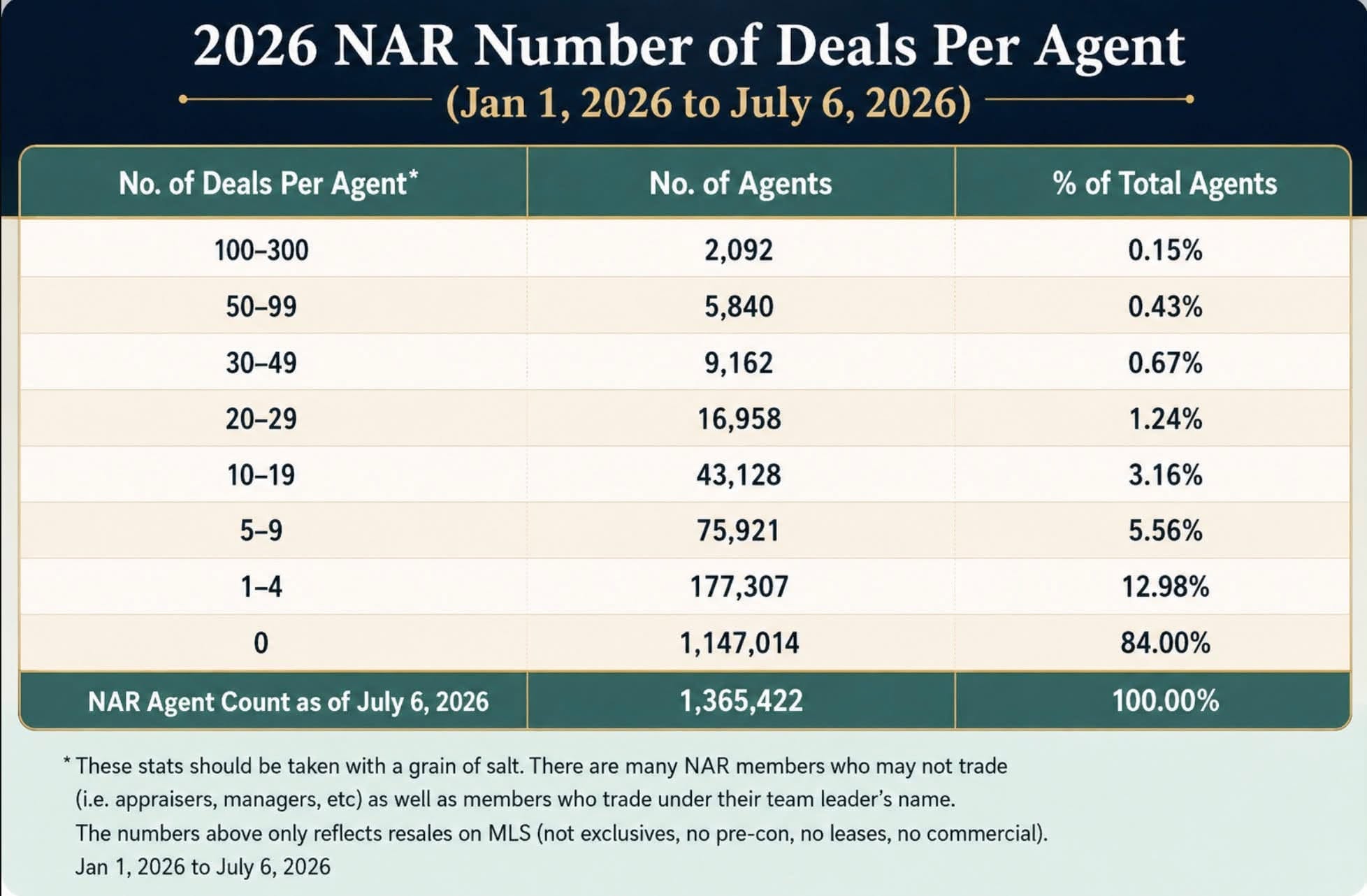
Considering MOST agents in the USA don’t actually sell any real estate, this is an important step. I share this not to scare you, but to give you a dose of reality that’s not always in the open.
Real support, not a title
“We have admin support” can mean a full-time transaction coordinator, or it can mean the team leader’s cousin answers email sometimes. Ask specifically: who writes my contracts to close? Who schedules photography? Who handles compliance? If the answer to everything is “you do, but we have great training,” that’s not support.
Training with structure
Good teams have an actual curriculum: scripts, shadowing, weekly role-play, coaching accountability. Bad teams have “an open door policy,” which means you’ll learn nothing because you won’t know what to ask. Also check whether the team leader is still selling. A leader competing with their own agents for deals is a red flag I’ve seen sink team cultures over and over.
A culture you’ve observed, not just heard about
Ask to sit in on a team meeting before you commit. Thirty minutes in the room tells you more than three interviews. Are agents helping each other or guarding their turf? Does the leader talk about agents’ goals or only the team’s volume? You’ll know the vibe fast.
Marketing that actually generates business
Look at what the team publishes. Do they produce content that attracts clients, or do they just post listing photos and hope? A team that treats marketing seriously builds assets that feed everyone. That’s the model I use on my own site, with resources like my Vero Beach communities guide and my complete Vero Beach relocation guide doing lead generation work around the clock. If a team can’t show you their equivalent, ask where the leads actually come from.
The questions almost nobody asks (and should)
These are the ones that separate agents who’ve done their homework from agents who get burned.
“What happens when I leave?” Every team relationship ends eventually. Ask now, while everyone’s friendly. Who keeps the clients you served? Do you get your database, or does it stay in the team’s CRM? Do you owe back any signing bonus or marketing money? Agents have left teams and received a no-contact list with their own past clients’ names on it. Get the exit terms in writing before you join, not after.
“Is there a commission cap or a graduation path?” Good teams have tiered splits that improve as you produce, or a path to build your own book within the team. If your split is 50/50 forever no matter what you produce, your ceiling is built into the contract.
“What are the mandatory costs?” Desk fees, monthly tech fees, mandatory lead fees, event fees. Some teams absorb all of it. Some nickel-and-dime you until your effective split is ten points worse than advertised. Ask for the complete list.
“Who owns my personal brand?” Can you market yourself, or only the team? If you build a following over three years, does it transfer with you? For newer agents this feels irrelevant. Five years in, it’s everything.
How to actually approach a team
This is the part most guides skip, and it’s the question new agents ask constantly: how do I make the ask without feeling like I’m begging for a job?
Here’s the secret from the recruiting side: team leaders are always recruiting. Always. Even with no job posting, even when they say they’re full. Good team leaders think about roster additions the way agents think about listings. You are not imposing by reaching out. You are the thing they’re looking for.
The playbook:
- Make a list of three to five teams in your market. Look at production (your local MLS and RealTrends rankings help), look at their marketing, look at their agents’ faces in the photos over time. High turnover shows up in team photos.
- Ask around before you reach out. Lenders, title reps, and inspectors work with everyone and know which teams treat people well. One coffee with a busy title rep will tell you more than any interview.
- Reach out directly to the team leader. Not a form on the website. A short, direct message: who you are, your production or your license status, and one specific reason you’re interested in their team. Specificity signals you did homework. “I saw your team closed 90 sides last year and I want to learn your listing systems” beats “are you hiring?” every time.
- Treat the interview as mutual. Bring your questions from the section above. Team leaders respect agents who interview them back. The ones who get offended are showing you how they’ll treat you later.
- Get everything in writing. Split, fees, lead expectations, exit terms, database ownership. A handshake deal protects exactly one person, and it isn’t you.
A note on how to join a real estate team if you’re an experienced agent
If you already produce, the calculus flips. You don’t need training. You need leverage. The only reasons to join a team at your level are scale (their lead flow plus your conversion skills), a niche you want in on, or getting your life back through their support staff.
You also have negotiating power. Splits are negotiable for producers, and any team leader who pretends otherwise is hoping you don’t know that. Make sure whatever you give up in split comes back to you in volume or hours. And protect the book of business you already built. It walks in the door with you, and it should be able to walk out with you.
Parting thoughts on joining a real estate team
Joining a real estate team is a business decision, not a social one. The right team compresses years of trial and error into months and pays for itself many times over. The wrong team takes half your commission for a logo and a group chat.
Do the math, ask the uncomfortable questions, talk to agents who’ve left as well as agents who stayed, and get the exit terms in writing while everyone still likes each other.
And if you’re an agent in Vero Beach or anywhere on the Treasure Coast thinking through your next move, I’m happy to be a sounding board. I’ve built teams, coached team leaders, and recruited agents on three continents, and I’m easy to reach. No pitch, just a straight answer about whether a team makes sense for where you are. You can learn more about my background at jonsterling.com.
Related reading:


Leave a Reply
Want to join the discussion?Feel free to contribute!