
Castaway Cove Vero Beach: A Local Community Guide
- Castaway Cove is a gated barrier island community just south of the 17th Street bridge in Vero Beach, with sections on both the east and west sides of A1A, running ocean to river.
- It isn’t one neighborhood. It’s built in “waves” with homes dating from roughly 1979 to 2022, so what you get changes a lot depending on which wave and which side of A1A you buy in.
- Recent sales have averaged a little over $1,000,000, around $408 per square foot, with homes often sitting 140 to 170 days before they sell. Inventory is thin.
- HOA fees swing wildly by section, from about $155 a year to over $1,500, and a few pockets are nearly fee-free. You have to check the specific home, not the community name.
- The real monthly cost here is driven by wind and flood insurance, not the HOA. Roof age, impact windows, and flood zone matter more than the granite in the kitchen.
If you’ve been researching Castaway Cove, you’ve probably landed on the HOA’s own website and come away knowing it’s gated, it’s near the water, and “paradise officially begins” there. That’s about it. What that page won’t tell you is how the community is actually laid out, what homes really cost, why two houses on the same street can have completely different HOA bills, or what your insurance is going to run. That’s the stuff that decides whether this is the right place for you, so that’s what I’ll walk through here.
I’m a licensed Florida real estate agent in Vero Beach, and I show buyers Castaway Cove alongside the other barrier island options so you can see how it stacks up. No single-community pitch. Just how it works.
Where Castaway Cove actually is
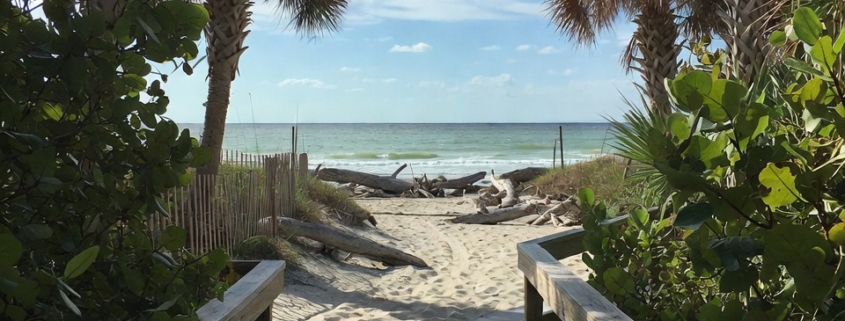
Castaway Cove sits on the barrier island just south of the 17th Street bridge, on the south end of Vero Beach’s island. The Atlantic is on one side and the Indian River Lagoon is on the other, so the community runs ocean to river. That geography is the whole appeal. You’re close to the sand, close to the water, and a short drive or golf cart ride from Ocean Drive’s restaurants and shops.
The piece most people miss is that Castaway Cove has gated sections on both sides of A1A. East of A1A puts you on the ocean side, generally with deeded or private beach access and, in several sections, a guarded gate. West of A1A puts you toward the river, often on larger lots, with some homes sitting right on the water. Same community name, two pretty different living experiences. If beach walks every morning are the point, you want east of A1A. If you want more land, more privacy, and possibly a river view, look west.
For the bigger picture on the area and how the island fits the rest of town, my where is Vero Beach breakdown lays out the geography.

How the “waves” work
Here’s the part that confuses almost every buyer. Castaway Cove wasn’t built all at once. It went up in phases, called waves, over four decades. Homes here date from around 1979 all the way to new construction in 2022 and after. There are several waves, some east of A1A and some west.
What that means in practice: the “Castaway Cove” listing you’re looking at could be a 1980s home that needs updating, a 2014 concrete block pool home, or a brand new 2023 coastal build with a 3-car garage. The architecture, the lot sizes, the construction quality, and the price per square foot all shift wave to wave. A few quick rules of thumb:
- Older waves (late 1970s through 1990s) tend to have larger, more mature oak-canopied lots and lower entry prices, but you’ll want to budget for roof, AC, windows, and updates.
- Newer waves and recent builds (2010s to 2020s) come with impact windows, newer roofs, and modern floor plans baked in, at a higher price per foot.
- East of A1A usually carries a premium for beach proximity and the guarded gate.
So when someone tells you “homes in Castaway Cove go for X,” push back. The right question is which wave, which side of A1A, and what year was it built. That’s where the real number lives.
What homes cost right now
Castaway Cove is a luxury barrier island community, and the pricing reflects it. Homes range broadly in size, from around 1,900 square feet up past 5,500, with 3 to 6 bedrooms depending on the wave.
Looking at the most recent year of activity on the Vero Beach MLS, a handful of homes changed hands, averaging a little over $1,000,000 on the sale, at roughly $408 per square foot. The list-to-sale ratio has held around 93%, which tells you sellers are getting close to ask but buyers still have room to negotiate. Homes have been taking somewhere in the 140 to 170 day range to sell, so this is not a market where you need to make a panic offer in 24 hours.
That said, inventory is genuinely thin. It’s common to have only one or two homes actively for sale at any given moment, and the standout properties, especially turnkey homes east of A1A, move faster than the averages suggest. If a home checks your boxes, it pays to be ready.
When you do find one, know your number before you write. My reasonable offer chart walks through how to anchor an offer to real comps instead of a gut feeling, which matters a lot in a low-inventory community where every sale sets the next comp.
The HOA situation nobody explains
This is where the HOA’s own website really leaves you hanging. People assume one community means one HOA fee. In Castaway Cove, it doesn’t.
Fees here range from roughly $155 a year on the low end to over $1,500 on the high end, with townhomes sometimes as low as around $50. A few pockets are essentially fee-free. The spread depends on which section you’re in and what the association covers there. In the guarded oceanside sections, you’re paying for 24/7 manned security, and that shows up in the fee. In the lighter sections, you’re paying for little more than common area upkeep.
Where there is an HOA, fees typically cover things like common area and road maintenance, security where it exists, insurance on common areas, and trash. Amenities across the community can include a pool, a park, and private beach access, though not every section shares all of them.
The takeaway: never trust the community-level fee number you see quoted online. Pull the actual HOA documents for the specific home, confirm what’s covered, and confirm any rules. Some sections have vehicle and pet restrictions you’ll want to know about before you fall in love with the house.
The flood and insurance reality
Here’s the conversation the glossy listing photos skip, and it’s the one that actually moves your monthly payment. Castaway Cove is on a barrier island between the ocean and the lagoon. That means wind insurance and, depending on the home, flood insurance, and those two line items can dwarf the HOA fee.
What I tell buyers to look at before they get attached to a home:
- Roof age. A roof installed after 2017, ideally a metal or current-code roof, makes a real difference on your premium. An older roof can be a dealbreaker or a price negotiation.
- Impact windows and doors. Full impact glass lowers wind premiums and, frankly, helps you sleep during hurricane season. Many updated Castaway Cove homes already have it. Confirm it’s the real thing.
- Flood zone and elevation. Two homes a block apart can be in different flood zones. Get the flood determination and an elevation certificate, and price the flood policy before you’re under contract, not after.
I’ll help you get real insurance quotes early so the monthly number you’re picturing is the actual one. It’s the single biggest surprise for buyers coming from out of state, and it’s avoidable.
Who Castaway Cove fits, and who it doesn’t
Castaway Cove is a strong fit if you want the barrier island lifestyle, gated security, and the choice between an oceanside home with deeded beach access or a more private riverside lot, all in one community. Families like it because it’s residential and quiet rather than a resort, and it’s close to good schools and to Ocean Drive. Buyers who want a primary home, a seasonal retreat, or a long-term hold all find something here because the waves offer such a range of price points and home ages.
It’s a weaker fit if you want a full country club lifestyle with golf, tennis, and dining built in. That’s not what this is. If a club community is what you’re after, the mainland and other island options serve that better. It’s also not the move if your budget tops out well under seven figures, since most of the inventory now sits above $1,000,000.
How it compares to nearby communities
Castaway Cove sits right near a few other names you’re probably weighing, so a quick honest contrast helps.
The Moorings is the neighboring island community with a yacht and country club at its center, so it leans more toward a membership lifestyle with golf, tennis, and marina access. Castaway Cove is more straightforward residential living with beach and river access and no club to join.
Central Beach trades some of Castaway Cove’s gated privacy for walkability. In Central Beach you can stroll to the sand and to dinner. Castaway Cove gives you the gate and the lot, with a short drive to the same restaurants.
If you want the full menu of island and mainland options side by side, start with my Vero Beach communities guide, and if you’re relocating, the complete Vero Beach relocation guide covers the practical stuff like cost of living, insurance, and timing a move.
Thinking about Castaway Cove?
Tell me which side of A1A you’re leaning toward, your budget, and whether this is full time or seasonal, and I’ll send you the Castaway Cove homes that actually fit, with real comps and honest insurance estimates attached. I’ll also flag which wave each one is in and what that means for your costs. Get in touch here or call me at 772-999-4457. Straight answers, no drip campaign you can’t escape.
Related reading