
Getting Around Vero Beach
Getting Around Vero Beach: A Local Guide
- You will want a car in Vero Beach, because the town is spread across a mainland and a barrier island and most errands involve driving.
- Uber and Lyft both work here, but pickup times run longer than in big cities, so schedule rides in advance for airports and early flights.
- The GoLine bus is completely free, runs 15 routes across Indian River County, and is one of the most underrated services in town.
- Vero Beach Regional Airport has commercial service through Breeze Airways, and Melbourne, Palm Beach, and Orlando airports are all within about two hours.
- Downtown and Central Beach are genuinely walkable, and the barrier island is great by bike, but everything in between is car territory.
I get some version of this question every week, usually from a buyer flying in from New York or Ohio to look at houses: “Do I need to rent a car, or can I get by without one?”
Here’s the honest answer that the corporate pages ranking for this search won’t give you: rent the car. Vero Beach is a small town stretched across a mainland and a barrier island, connected by two bridges, and it was built around driving. That said, once you understand the layout, getting around here is genuinely easy. No traffic jams worth complaining about, free parking almost everywhere, and a few transportation options that surprise people, including a bus system that costs nothing to ride.
This is the full picture, from the airports to the bike trails, written by someone who drives these roads every day showing property.
First, understand the layout
Vero Beach has two halves. The mainland holds downtown, the hospital, most of the shopping, and the majority of the neighborhoods. The barrier island holds the beaches, Ocean Drive, and the oceanfront and riverfront communities.
Two bridges connect them: the Merrill P. Barber Bridge on State Road 60 and the Alma Lee Loy Bridge at 17th Street. Crossing either one takes about five minutes. When locals say “beachside” or “the island,” they mean everything east of those bridges.
Once you have that mental map, distances make sense. Almost nothing in Vero Beach is more than 15 to 20 minutes from anything else. That’s one of the quiet luxuries of living here that people coming from Boston or Chicago don’t appreciate until their third or fourth trip.
Getting to Vero Beach: your airport options
This is where most out-of-town guides get lazy, so let me give you the real breakdown.
Vero Beach Regional Airport (VRB) sits about a mile northwest of downtown. Most people are shocked to learn we have commercial service at all. Breeze Airways flies nonstop routes to Northeast cities, and the whole experience is what flying used to be: park close, walk in, board. If Breeze serves your city, this is the move. Nothing beats landing ten minutes from your hotel or your showing appointment.
Melbourne Orlando International (MLB) is about 35 miles north, roughly a 45 minute drive up I-95 or US 1. It’s a comfortable regional airport with a decent slate of direct flights, and it’s my default recommendation for buyers flying in.
Palm Beach International (PBI) is about 70 miles south, around an hour and a half. More flight options than Melbourne, still an easy airport to move through.
Orlando International (MCO) is about 90 miles northwest, close to a two hour drive. It has the most routes and often the cheapest fares, and the drive down is a straight shot. If you’re relocating and hauling luggage for a long stay, the fare savings can be worth the extra hour.
All four have rental car counters. If you’re coming to look at homes, rent the car at the airport. You’ll want the freedom to drive the neighborhoods on your own schedule, and I cover which ones to drive in my Vero Beach communities guide.
One note on trains, since I get asked: Brightline runs right through Vero Beach on the coastal tracks, but it doesn’t stop here. The nearest stations are in West Palm Beach and Orlando. Locals have opinions about that. For now, plan on flying or driving.
Uber and Lyft in Vero Beach: they work, with one catch
Yes, rideshare is alive and well here. Uber and Lyft both operate throughout Vero Beach and Indian River County, and for a dinner out on Ocean Drive or a quick hop across the bridge, they’re perfectly reliable.
The catch is pickup time. This is not Miami. There are fewer drivers on the road, especially early in the morning, late at night, and in the summer off season. If you request a ride on demand, you might wait 15 to 25 minutes instead of 4.
The fix is simple: schedule your ride in advance. Both apps let you book pickups ahead of time, and for airport runs I’d call that mandatory. If you have a 7 a.m. flight out of Melbourne, do not stand in your driveway at 5 a.m. hoping a driver is awake. Book it the night before. A handful of local taxi and private car services also do fixed-rate airport transfers, and plenty of my snowbird clients keep a favorite driver’s number in their phone.
The GoLine bus: free, and better than you’d expect
Here’s the option almost nobody writing about Vero Beach from a corporate office knows anything about. GoLine is Indian River County’s public bus system, it runs 15 fixed routes covering Vero Beach, Sebastian, and the county, and it is completely free to ride. Not discounted. Free.
Buses run Monday through Friday from 6 a.m. to 7 p.m., with Saturday service on several routes from 8 a.m. to 5 p.m. The main transit hub sits on 16th Street near downtown, and routes reach the beachside, the Indian River Mall, the airport area, and Cleveland Clinic Indian River Hospital. There’s a free app that shows real-time bus arrivals, and the system has won statewide awards multiple times.
Is it a full replacement for a car? No. Frequency is roughly hourly on most routes, and there’s no Sunday service. But for retirees who’d rather not drive, workers commuting across town, and anyone stretching a budget, it’s a legitimately good service that most towns this size simply don’t have. GoLine is run by the Senior Resource Association, which also operates a door-to-door paratransit service for seniors and riders with disabilities, something worth knowing if you’re helping a parent relocate here.
Walking and biking: better than the stereotype
Florida gets a bad rap as a place you can’t walk, and for big chunks of the state it’s earned. Vero Beach has two real exceptions.
Downtown Vero Beach, centered on 14th Avenue, is a compact historic district where you can park once and walk to galleries, restaurants, and the Friday night events. Central Beach, the Ocean Drive district on the island, is the same story with salt air: hotels, boutiques, and some of the best restaurants in Vero Beach within a few walkable blocks of the beach.
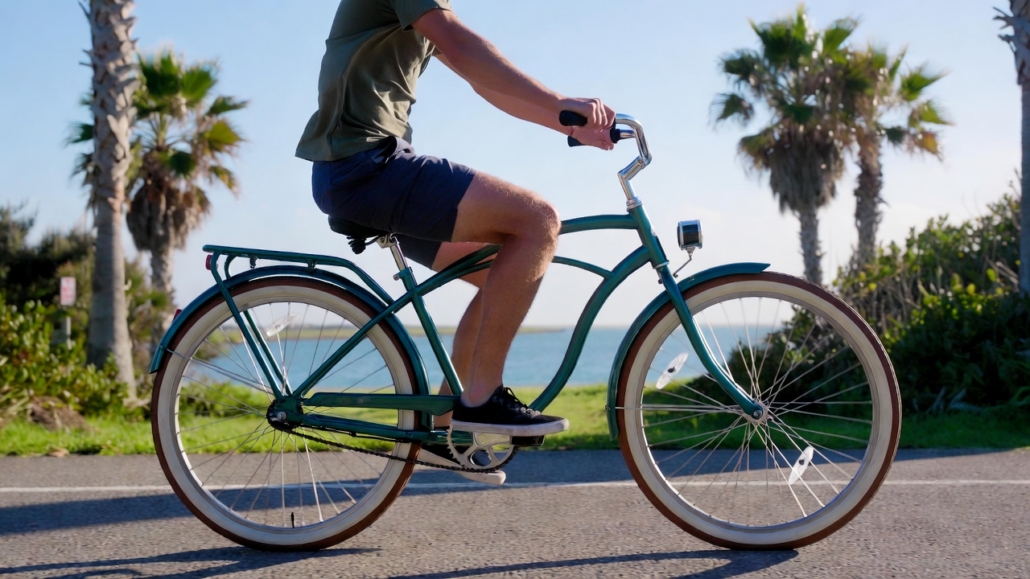
For biking, the barrier island is the star. The Jungle Trail is a historic dirt road winding along the lagoon past old citrus land and the wildlife refuge, and it’s one of my favorite rides anywhere in Florida. A1A has paved paths popular with road cyclists, and the Lagoon Greenway on the mainland offers an easy, shaded loop. Terrain is pancake flat, which means anyone can ride here. Bring water and sunscreen from May through September and you’re set. Plenty of island hotels and local shops rent bikes if you’re visiting.
If a walkable or bikeable daily life is a priority in your home search, tell me that up front. It narrows the map considerably, and it’s exactly the kind of thing I flag when I walk buyers through neighborhoods in my complete relocation guide.
Driving here: what daily life actually looks like
Day to day, driving in Vero Beach is about as low-stress as driving gets in Florida. State Road 60 is the main east-west spine, US 1 runs north-south on the mainland, and A1A runs the length of the island. Parking is free at the beaches, free downtown, and plentiful nearly everywhere.
Two honest caveats from a local. First, season is real. From January through Easter, the town fills with winter residents and the roads get noticeably busier, especially near the bridges and on Ocean Drive around lunch. “Busy” here still means minutes of delay, not hours, but you’ll feel the difference. Second, summer afternoon thunderstorms roll in fast and drop serious rain. They pass quickly. Pull over if you can’t see; everyone local does.
So what should you actually do?
If you’re visiting, fly into VRB if Breeze serves your city, otherwise Melbourne, and rent a car. Use it for exploring and everything there is to do here, then walk Ocean Drive and downtown once you’re parked.
If you’re house hunting, rent the car, period. You need to feel the drive between a neighborhood, the beach, and the grocery store before you buy. That drive is data.
If you’re moving here, plan on owning a car, and treat GoLine, biking, and walkable districts as the bonus layer that makes the lifestyle better. Where you land on the island-versus-mainland question shapes how much you’ll drive, and that’s a conversation I have with relocating buyers every single week.
Want the local read before your trip?
I’m a licensed real estate agent here in Vero Beach, and half my job is logistics: which airport fits your route, which neighborhoods put you five minutes from the beach instead of twenty, and what daily life feels like from each part of town. If a visit is turning into “could we live here,” get in touch or call or text me at 772-999-4457, and I’ll help you plan the trip around the neighborhoods worth seeing. You can start at jonsterling.com any time.


Leave a Reply
Want to join the discussion?Feel free to contribute!